Preventing Fires in Baled Hay and Straw


Use the following format to cite this article:

Preventing fires in baled hay and straw. (2012). Farm and Ranch eXtension in Safety and Health (FReSH) Community of Practice. Retrieved from http://www.extension.org/pages/66577/preventing-fires-in-baled-hay-and-straw.


Most hay fires occur within the first six weeks after baling. Understanding the causes of fires in stored hay and learning how to reduce fire hazards will protect your feed supply and could prevent the loss of time and money associated with a fire. 

Causes of Fires in Baled Hay or Straw

Moisture content is the main factor that causes hay and straw to spontaneously combust. Hay fires are more common than straw fires, for reasons involving the type of forage, the moisture content in the stored forage, and heat production.

After forages are cut, respiration of plant fibers (burning of plant sugars to produce energy) continues in plant cells, causing the release of a small amount of heat. When the forages are cut, field dried, and baled at the recommended moisture level (20% or less), plant cell respiration slows and eventually ends. 

When forages are baled at moisture levels of greater than 20%, the right environment is provided for the growth and multiplication of mesophilic (warm temperature) bacteria found in forage crops. Mesophilic bacteria release heat within the bale and cause the internal bale temperature to rise between 130ºF and 140ºF. At this temperature range, bacteria die and bale temperature decreases. Fire risk is greater for hay than for straw because a hay bale’s interior temperature does not cool after the first initial heating cycle. The respiratory heat created by the mesophilic bacteria provides a breeding ground for thermophilc (heat loving) bacteria. Basically, the higher the moisture content, the longer a bale will remain at a higher temperature. For example, a bale with 30% moisture content may have higher interior bale temperature for up to 40 days. When thermophilic bacteria are present, they multiply and produce heat, which can raise interior bale temperature to over 170°F. At these temperatures, spontaneous combustion can occur.

Additional factors that contribute to the risk of hay fires include the volume of the mow or bale stack, bale density, and ventilation or air flow around the stacked bales. Bales with a lower density that are stacked lower and have good air flow and ventilation have a lower risk of overheating.

Decreasing the Risk of Fire

The best way to reduce the risk of a hay fire is to bale hay at a moisture content of 20% or less because at this moisture level, microbial activity decreases. There are several ways of reducing moisture content in baled hay:

  • Baling under appropriate conditions: Weather plays a critical role in achieving the appropriate moisture level in baled hay. The recommended weather conditions for haymaking are a slight wind and a humidity level of 50% or less. Because hay has a higher moisture content in the morning, it is recommended that you bale later in the day. The recommended practice for haymaking is to mow hay in the morning and allow it to dry in the field for a minimum of one full day prior to baling.
  • Using specialized equipment: Another way of decreasing moisture content is to use specialized haying equipment designed to increase drying rates. Such equipment includes tedders, windrow inverters, hay rakes, and conditioning equipment.
  • Using hay preservatives: Hay preservatives, such as liquid propionic acid, applied to the hay during baling inhibit or reduce the growth of bacteria in hay with a high moisture content. 

Another way to reduce the risk of a hay fire is to ensure that stored hay remains dry. 

  • When storing hay inside, make sure the barn or storage area is weathertight and has proper drainage to prevent water from entering the barn. 
  • When storing hay outside, cover the hay with plastic or another type of waterproof material. If you are unable to cover the bales, arrange the bales so that air can circulate between them to promote drying. Bales can be protected from ground moisture by storing them on a bed of gravel or lifting them off the ground on used tires, poles, or pallets.

Monitoring the Temperature of Stored Hay

If you are concerned that hay may have been baled at too high a moisture content, monitor the internal bale temperature twice daily for the first six weeks after baling. For safety reasons, you must work with a partner when checking the temperature of stacked bales. One of you stands atop the bales to measure the internal temperature while the other observes. The person testing the hay should wear a harness and a lifeline that is attached to a secure object. In the event of an emergency, such a system allows the observer to pull the person checking the temperature out of the hay. Due to the potential dangers of this situation, this task should not be assigned to youth workers.

You can use a commercial thermometer to test the temperature of baled hay, but commercial thermometers are not always the appropriate length to monitor the interior zone of baled hay. If a commercial thermometer does not meet your needs, you can fabricate a probe from a 10 ft. length of 3/4 in. iron pipe. Drill eight holes that are 3/16 in. in diameter about 3 in. from one end. Hammer that end of the pipe to form a sharp edge with which to probe. Insert the probe into a hay bale, and use a piece of light wire to lower a thermometer down into the end of the pipe. Alternatively, you may use a piece of 3/8 in. pipe that is 8 to 10 ft. long to test the temperature of hay.

To test the temperature of the hay, place wooden planks or plywood across top of the bales so that the weight of the person standing on the hay is distributed evenly and he or she will be at less risk of falling into a burned-out cavity. Drive a commercial thermometer or a homemade probe into the bale of hay. If you use a fabricated probe, keep the thermometer in the probe for approximately 10 to 15 minutes to obtain the temperature reading. If you use a 3/8 in. pipe, leave the pipe in place for 20 minutes. When you remove the pipe from the hay, if the pipe is too hot to hold in your hand, then you should remove the hot hay.

The following temperature chart outlines further actions that may need to be taken depending on the temperature of the hay.

Critical Temperatures and Action Steps
Temperature (ºF) Condition and Action
125 No action needed.
150 Hay is entering the danger zone. Check temperature twice daily. Disassemble stacked hay bales to promote air circulation to cool the hay.

160

Hay has reached the danger zone. Check hay temperature every couple of hours. Disassemble stacked hay bales to promote air circulation to cool the hay.
175 Hot spots or fire pockets are likely. Alert fire services to the possible hay fire incident. Stop all air movement around the hay.
190 With the assistance of the fire service, remove hot hay. Be aware that hay could burst into flames.
200 or higher With the assistance of the fire service, remove hot hay. Most likely, a fire will occur. Be aware that hay could burst into flames.

(Source: National Resource, Agriculture, and Engineering Service [NRAES])

Hay Fire Hazards

The following three hazards exist from hay fires: 

  • Flare-Ups: When the internal hay bale temperature is between 150ºF and 170ºF, the potential exists for spontaneous combustion, and the hay should be moved to allow it to cool. If the temperature is at the higher end of the range, moving the hay could expose it to oxygen and cause flare-ups. Contact your local fire department and have charged water hoses available. 
  • Burned-Out Cavities: These cavities form when temperatures deep within stored hay reached high temperature levels and the hay has burned. A person can become trapped in a burned-out cavity if he or she is walking over the top of the hay pile. Due to the risk of a person falling into a burned-out cavity, at least two people should investigate a hay mow.
  • Toxic Gas: Toxic gases such as carbon monoxide can be released by smoldering and burning hay. Chemically treated hay may emit additional toxic gas vapors. A trained fire-rescue worker with a self-contained breathing apparatus (SCBA) should be called to assist at the scene in either situation.

When a Fire Occurs

In the event of a fire, or even when hay is smoldering, contact the fire department immediately. Your next action step and main priority should be to protect human life. Remember that you can replace hay, buildings, and equipment, but you cannot replace human life.

Before taking any action to fight a fire, consider other valuable actions you can take to address the situation prior to the arrival of fire fighters, including the following:

  • Account for all personnel on your farm or ranch operation.
  • Check the area for flammable products. If any are present, immediately leave the area and upon the fire fighters’ arrival, make them aware of the flammable products.
  • Determine whether electricity needs to be turned off in buildings.
  • If the hay fire is located inside a building that houses livestock, consider personal safety before relocating livestock to an area away from the structure.
  • Remove any extra vehicles or machinery from the area around the fire to clear space for the fire service equipment.
  • Stage bale-moving machinery out of the immediate fire area, but have it available to help move bales, as directed by fire fighters.
  • Retrieve material safety data sheets (MSDSs) for any chemical preservatives that may have been used on the hay and that fire fighters will need to review.

Moving hay bales is hot, smoky, and physically demanding work that can cause injuries, exhaustion, smoke inhalation, and heart attacks. Individuals involved at the scene need to be monitored and should receive medical attention should they exhibit signs related to any of these health concerns.

Things to Remember:

  • Most hay fires related to moisture levels occur in the first six weeks after baling.
  • When baling hay, keep moisture levels at 20% or less.
  • Keep baled hay dry by covering it or storing it inside.
  • Monitor internal bale temperature on a regular basis.
    • Youth workers should not be given the task of checking hay temperatures.
  • If you store uncovered bales outside, arrange bales so that air can circulate around them.
  • The use of ventilation changes based on the temperature of the hay. At lower temperatures, increased ventilation around the bales will help the hay return to an acceptable temperature. If hay temperatures reach 175ºF, stop ventilating hay because the increased air flow could feed a fire.
  • Maintain MSDSs for any crop preservatives that may have been used on the hay, and have the MSDS readily available for fire service personnel.


Use the following format to cite this article:

Preventing fires in baled hay and straw. (2012). Farm and Ranch eXtension in Safety and Health (FReSH) Community of Practice. Retrieved from http://www.extension.org/pages/66577/preventing-fires-in-baled-hay-and-straw.


Sources


Gay, S., Grisso, R., Smith, R., & Swisher, J. (2003) Hay fire prevention and control. Virginia Cooperative Extension. Retrieved from https://www.uky.edu/Ag/Forage/Hay%20Fire%20Prevention%20and%20Control%20….

Harshman, W., Yoder, A., Hilton, J., & Murphy, D. (2011) Hay storage fires. Hazardous Occupations Safety Training in Agriculture 3.7.2. Retrieved from http://www.extension.org/sites/default/files/NSTMOP%20Task%20Sheets%20Se….

Lemus, R. (2009) Hay storage: Dry matter losses and qualify changes. Mississippi State University Extension Service. Retrieved from http://msucares.com/pubs/publications/p2540.pdf.

Murphy, D. & Arble, W. (2000) Extinguishing fires in silos and hay mows. New York: Natural Resource, Agriculture, and Engineering Service (NRAES).
 

Reviewers, Contributors, and Summarized by:
Linda M. Fetzer, Pennsylvania State University – lmf8@psu.edu
LaMar J. Grafft, East Carolina University grafftl@ecu.edu
Dave E. Hill, Pennsylvania State University  (Has since retired)
Dennis M. Murphy, Pennsylvania State University – (Has since retired)
Cheryl Skjolaas, University of Wisconsin  skjolaas@wisc.edu
Aaron M. Yoder, University of Nebraska Medical Center – aaron.yoder@unmc.edu


American Society of Safety Engineers

ASSE Logo

The American Society of Safety Engineers (ASSE) was formed in 1911 and is the world’s oldest professional safety society. The organization’s mission is to promote the expertise, leadership, and commitment of its members while providing members with professional development opportunities and advocacy and standards development. With over 30,000 worldwide members, the organization works to create safer work environments by sharing information and best practices to prevent workplace fatalities, injuries, and illnesses.

ASSE AgBranch Logo

The Food & Agribusiness Branch of the American Society of Safety Engineers (ASSE) provides an avenue for agricultural safety professionals to network and gain knowledge. Examples of the topics addressed by this branch include tractor safety, noise exposure, confined space entry, and so on. Once a person is a member of the Manufacturing Practice Specialty through ASSE, he or she can join the Food & Agribusiness Branch at no additional cost. Click here to visit ASSE website and learn more about the Food & Agribusiness Branch of the ASSE.


Reviewed and Summarized by:
Linda M. Fetzer, Pennsylvania State University – lmf8@psu.edu
Dennis J. Murphy, Pennsylvania State University – djm13@psu.edu
Mike Wolf, Agricultural Branch, ASSE – mwolf01@harris.com
Aaron Yoder, University of Nebraska Medical Center – aaron.yoder@unmc.edu


Canadian Agricultural Safety Association

CASA Logo

(Source: Canadian Agricultural Safety Association)

The Canadian Agricultural Safety Association (CASA) is a national nonprofit organization promoting farm safety in the agricultural sector. CASA’s vision is a country where no one is hurt farming, and CASA is working with partners in government and business and with farming organizations across the country to support initiatives that equip producers, their families, and their workers with the information and tools needed to make farms safe places to live, work, and play.

Click here to visit the CASA website and learn more about the following agricultural safety and health resources:

  • Safety Shop: A library of resources that includes articles, videos, presentations, and farm safety training kits
  • Canadian Injury Data: Studies that examine long-term trends in agricultural injuries in Canada
  • Farm Safety Grants: A listing of funding available for the development of tools and resources or training to help make communities safer (available to Canadian applicants only)

Canada FarmSafe Plan

Agriculture continues to rank as one of the most dangerous occupations. Farmers and ranchers may say that safety is important, but very few have gone through the process of developing a safety plan for their agricultural operations. The CASA has developed a program called Canada FarmSafe to help farmers manage safety and health activities on their operations. Click here to be directed to the FarmSafe page. From this page you can download the basic Canada FarmSafe Plan at no charge to help you start developing a safety plan. Canada FarmSafe provides instructions that will enable you to develop safety and health policies, identify and control hazards, communicate responsibilities, and review your plan.


Reviewed and Summarized by:
Glen G. Blahey, Canadian Agricultural Safety Association  GBlahey@casa-acsa.ca

Linda M. Fetzer, Pennsylvania State University – lmf8@psu.edu
Michelle French Lancaster, Canadian Agricultural Safety Association – mfrenchlancaster@casa.acsa.ca
Dennis J. Murphy, Pennsylvania State University – djm13@psu.edu
Aaron M. Yoder, University of Nebraska Medical Center – aaron.yoder@unmc.edu


Asthma and Agriculture


Use the following format to cite this article:

Asthma and agriculture. (2021). Agricultural Safety and Health eXtension Community of Practice. Retrieved from https://ag-safety.extension.org/asthma-and-agriculture/.

Asthma is characterized by airflow obstruction, bronchial hyper-responsiveness, and chronic inflammation of the airways. These responses cause wheezing, shortness of breath, coughing, and tightness in the chest.

Asthma Types

The two most common types of asthma are allergic and nonallergic. The type of asthma depends on the triggers and environments that cause symptoms.

Allergic or Atopic Asthma

Allergic asthma, also referred to as atopic asthma, is caused by exposure to allergens such as pollen, mold, pet dander, and so on. These allergy triggers—pollen, for example—may not be present at all times, so asthmatic symptoms vary depending on the season and the environment.

Allergic asthma activates the body’s immune system, which protects the body from harmful foreign substances and microbes. When the body comes into contact with a foreign substance, it releases antibodies to react with or destroy the substance. However, sometimes the antibody release involves the overproduction of an antibody called immunoglobulin E, causing a release of chemical mediators such as leukotriene, prostaglandin, and histamine, which can result in the contractions of airway muscles that characterize an asthma attack.

Nonallergic Asthma

Nonallergic asthma is triggered by nonallergenic substances such as wood smoke, grain dust, tobacco smoke, fresh paint, cleaners, perfumes, and so on. Symptoms are similar to those of allergic asthma. Repeated exposure to these nonallergenic substances causes the release of chemical mediators (described above) that can cause airway constriction.

Occupational Asthma

Occupational asthma, the type of asthma most commonly associated with agriculture, is typically caused by exposure to a substance in the workplace that enters the lungs and activates the immune defense mechanism. The management of occupational asthma symptoms is impacted by exposure to allergens. Agricultural workers on farms and at grain elevators and food processing plants are at an increased risk of occupational asthma.

Examples of Causes or Aggravators of Occupational Asthma

Agricultural producers are exposed to a wide variety of allergens than can cause asthma or aggravate existing asthma. Additional risk factors for the development of asthma include genetics, gender, allergies, and environmental factors (such as tobacco smoke, mold, and so on).

Some of the triggering agents associated with asthma in agriculture include the following:

  • Grain dust: Grain dust is commonly found in barns, flour mills, and grain-storage facilities. Asthma resulting from grain dust occurs when a person is sensitized to the grain dust or a dust component.
  • Bacteria and fungi: Airborne bacteria and fungi (mushroom spores, mold, and so on) residing in agricultural structures can get into the lungs of an agricultural producer. Some of the cellular components of these bacterial and fungal microorganisms can cause an immune response that can result in an asthma attack.
  • Insects: Mites can be found in most homes and agricultural settings. These extremely small insects feed off organic material and may trigger asthma attacks for some people. Storage mites can be found in storage areas of organic products; dust mites are located wherever there is dust; and red spider mites are located in certain greenhouse crops. Cockroaches and their droppings can also trigger asthma attacks in some people, so it is necessary to clean areas attractive to cockroaches at least every two to three days.
  • Pesticides: Some of the pesticides used to get rid of pests have been associated with agricultural asthma.
  • Animal products: Potential allergens from animals include substances that contain proteins, such as dander, saliva, urine, and feces. The breakdown of urea and ammonium excretions can cause a release of ammonia in the environment that can be a respiratory irritant. Feathers and wool can also trigger asthmatic reactions.
  • Pollen
  • Tobacco leaves
  • Chemicals: Chemical irritants include polyvinyl chloride vapor and amprolium hydrochloride.
  • Wood smoke: Burning wood releases a mixture of harmful gases that can cause asthma attacks.

Other Types of Asthma

Other types of asthma include the following:

  • Viral-induced asthma: Viral respiratory infections, such as the common cold, can trigger an asthma attack.
  • Nocturnal asthma: Nocturnal asthma refers to asthma that worsens during the night—typically between two and four o’clock in the morning—either due to sinus infection or from the presence of an allergen such as dust mites or pet dander. Often gastrointestinal reflux (heartburn) is worse at night and may trigger an attack.
  • Reactive Airways Dysfunction Syndrome (RADS): RADS occurs after exposure to high concentrations of airborne irritants, such as chlorine. Asthmatic symptoms develop within 24 hours and may continue for several months or longer. Symptoms may recur with further exposure to high concentrations of the irritant.

Exercise and air temperature (especially cold air) can also trigger a person’s allergic or nonallergic asthma.

Reducing Your Risk of an Asthma Attack

Anyone with symptoms of asthma should have a primary medical care provider. Those with persistent symptoms may need to use a daily controller medicine, usually one that is inhaled, to reduce the chance of a flare-up. In addition, people with asthma should also always have a rescue inhaler available for acute symptoms.

The following actions can reduce allergens on your farm or ranch and limit your exposure to allergens:

  • Store grain at recommended moisture-content levels to reduce mold growth.
  • Properly ventilate animal-housing areas to reduce the accumulation of ammonia and other gases.
  • Frequently remove animal waste to reduce the buildup of ammonia and decrease your exposure to urine and fecal allergens.
  • Identify dust hazards at your farm or ranch and reduce exposure by cleaning these areas. Limit your time in dusty areas.
  • When cleaning a barn or stable, wet down areas to avoid dust from becoming airborne.
  • If you are a farm manager, provide appropriate personal protective equipment (PPE) for your employees.
  • Wash your work clothes in hot water at least once per week.
  • To protect against dust, bacteria, fungi, insects, and animal products when cleaning, spraying, harvesting, handling grain, or working in an animal-confinement building, wear an N-95 or N-100 disposable particulate respirator that is properly fitted and approved by the National Institute of Occupational Safety and Health (NIOSH).
Double Strap Respirator

(Particulate Respirator. Source: Pennsylvania State University. Agricultural Safety and Health)

Resources

  • For more information about respiratory illnesses associated with agriculture, click here to link to the article “Respiratory Illnesses Associated with Agriculture.”
  • For more information about the hazards of grain dust, click here to link to the article “Grain Dust Explosions.”
  • For more information about PPE and respiratory protection, click here to link to the article “Respiratory Protection on the Farm and Ranch.”

Use the following format to cite this article:

Asthma and agriculture. (2021). Ag Safety Safety and Health eXtension Community of Practice. Retrieved from http://www.extension.org/pages/66326/asthma-and-agriculture.

Sources

Asthma. (2018) Candian Centre for Occupational Health and Safety. Retrieved from https://www.ccohs.ca/oshanswers/diseases/asthma.html.

Asthma. (2019). Centers for Disease Control and Prevention. Retrieved from http://www.cdc.gov/asthma/faqs.htm.

Schenker, M.B. (2005) Farming and asthma. Occupational and Environmental Medicine. Retrieved from http://oem.bmj.com/content/62/4/211.1.full.

Reviewed and Summarized by:
Linda M. Fetzer, Pennsylvania State University – lmf8@psu.edu
Tom Irons, MD, East Carolina University  ironst@ecu.edu
David Lipton, North Carolina Department of Health and Human Services  david.lipton@dhhs.nc.gov
Rick Langley, North Carolina Department of Health and Human Services  rick.langley@dhhs.nc.gov
Dennis J. Murphy, Pennsylvania State University (Has since retired)
Aaron M. Yoder, University of Nebraska Medical Center – aaron.yoder@unmc.edu
Article updated 1/26/21

Rollover Protective Structures


Use the following format to cite this article:

Rollover protective structures. (2013). Farm and Ranch eXtension in Safety and Health (FReSH) Community of Practice. Retrieved from http://www.extension.org/pages/66325/rollover-protective-structures.


Tractor rollover incidents account for approximately half of all tractor-related fatalities across the country. A rollover protective structure (ROPS) fits on an agricultural tractor and protects the operator in the event of a rollover.

A tractor’s ROPS and seat belt work in conjunction to secure the operator in a protective zone, reducing the operator’s risk of being crushed under the tractor should it overturn. In most situations, the ROPS limits the overturn to little more than 90 degrees.

Although tractors built after 1985 are equipped with ROPSs and seat belts, many farmers and ranchers use older tractors that are not equipped with these safety devices. According to Occupational Safety and Health Administration (OSHA) guidelines, farm and ranch owners are required to have a ROPS and seat belt installed on all tractors operated by employees.

ROPS: Type and Structure

There are three types of ROPS, all of which protect the operator in the event of a rollover:

  • two-post ROPS
  • four-post ROPS
  • ROPS with enclosed cabs

Two-Post ROPS

Tractor with ROPS

(Two-post ROPS. Source: Pennsylvania State University. Agricultural Safety and Health)

The two-post ROPS (pictured above) is the most common type of ROPS. The upright posts are typically vertical or slightly tilted and are mounted to the rear axle. Two-post ROPSs are either rigid or foldable.

  • A foldable ROPS has a specially designed hinge that allows the ROPS to fold to fit in low-clearance areas.
  • You must raise and lock the foldable ROPS after completing activities in low-clearance areas.
    • A foldable ROPS that is not in its upright position will not provide protection during a rollover.

Four-Post ROPS

A four-post ROPS is mounted on both axles and on the frame in front of the operator. Occasionally, a four-post ROPS is mounted to the tops of specially reinforced flattop rear fenders.

ROPS with an Enclosed Cab

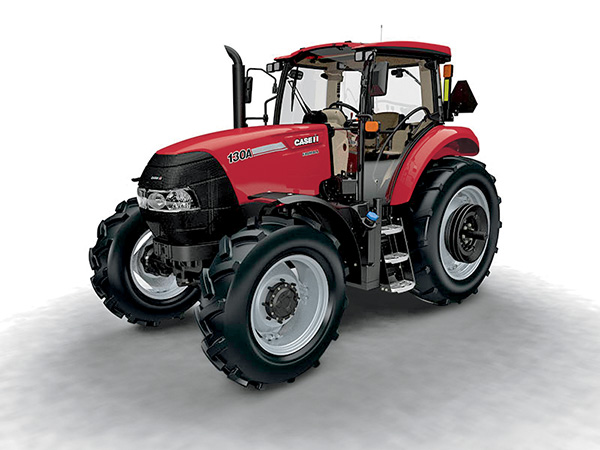
Farmall 130A Tractor

Farmall 130A Tractor. Photo Source: Case IH Media Library

Typically, a tractor is outfitted with a ROPS with an enclosed cab by the manufacturer—the tractor’s cab structure is designed to act as a ROPS. As sales of tractors with cabs have increased, ROPSs with enclosed cabs have become more common.

Falling Object Protective Structures

A falling object protective structure (FOPS) is a canopy specially designed to protect the operator from falling objects. FOPSs are especially recommended for use on front-end loaders and when working in wooded areas or other situations that may involve falling objects.

Most FOPS are used on tractors with four-post ROPS or ROPS with enclosed cabs. 

Retrofitting Older Tractors

Most tractors built before 1985 can and should be retrofitted with ROPS and seat belts. Check with your local dealership or manufacturer to determine the availability of ROPS retrofit kits. You may also click here to access the University of Kentucky ROPS Guide to determine whether a ROPS is available for your tractor. You should have technicians at a dealership install any aftermarket ROPS.

ROPS Safety Standards

Do not use a homemade ROPS on your agricultural tractor; it will not provide you with the necessary protection in the event of a rollover and may pose liability issues.

Manufacturers have designed and tested ROPS to meet specific standards developed by the Society of Automotive Engineers (SAE), the American Society of Agricultural Engineers (ASAE)—now called the American Society of Agricultural and Biological Engineers (ASABE)—and other organizations. These standards indicate that a ROPS has passed specially designed crush, static, and dynamic tests that confirm its effectiveness.

ROPS must meet the following standards:

  • SAE J2194
  • OSHA 1928.51

In Canada, ROPS must meet the following standards:

  • Canadian Standards Association (CSA) B352.0
  • Canadian Standards Association (CSA) SA 352.1 
Certification labels identify structures that meet the safety standards required of a ROPS. Some cab structures and bars may look like ROPS, but only ROPS have certification labels.
  • Two- and four-post ROPS should have labels applied directly to the posts.
  • The label on a ROPS with enclosed cab should be located on the edge of the cab door.
Like ROPS, FOPS must meet SAE and ASAE standards. If you are uncertain whether your canopy is a certified FOPS, check with the ROPS supplier or equipment dealer.

ROPS Maintenance

A factory-installed ROPS should never be structurally modified (that is, cut, welded, and so on). Such modifications can impact the integrity of the ROPS and impair its effectiveness in a rollover.

Periodically check the ROPS and seat belt on each tractor for signs of wear such as rust and cracks. Contact the dealership regarding the best way to properly correct any issues.

Resources

Click here to learn about aftermarket ROPS rebate programs available in certain areas of the United States.


Use the following format to cite this article:

Rollover protective structures. (2013). Farm and Ranch eXtension in Safety and Health (FReSH) Community of Practice. Retrieved from http://www.extension.org/pages/66325/rollover-protective-structures.

Sources


American Society of Agricultural and Biological Engineers (ASABE), 2012. ANSI/ASAE S478.1. Roll-Over Protective Structures (ROPS) for Compact Utility Tractors. St. Joseph, MI. Retrieved from http://www.elibrary.asabe.org.


Murphy, D. and Buckmaster, D. (2003) Rollover protection for farm tractor operators. Penn State College of Agricultural Sciences, Agricultural and Biological Engineering. Retrieved from https://extension.psu.edu/rollover-protection-for-farm-tractor-operators.

The Kentucky ROPS Guide. (2010) Southeast Center for Agricultural Health and Injury Prevention, University of Kentucky. Retrieved from http://rops.ca.uky.edu/?utm_medium=301&utm_source=warehouse-page.

 
Reviewed and Summarized by:
Linda M. Fetzer, Pennsylvania State University – lmf8@psu.edu
Jimmy Maass, Virginia Farm Bureau Insurance (Has since retired)
Dennis J. Murphy, Pennsylvania State University – djm13@psu.edu
Charles V. Schwab, Iowa State University  cvschwab@iastate.edu
Aaron M. Yoder, University of Nebraska Medical Center – aaron.yoder@unmc.edu
 

International Society for Agricultural Safety and Health (ISASH)


ISASH Logo

(ISASH Logo. Source: International Society for Agricultural Safety and Health)

The National Institute for Farm Safety (NIFS) recently approved a name change to become the International Society for Agricultural Safety and Health (ISASH). This organization began in the 1940s with a meeting of three farm safety specialists and has grown into the ISASH, with members from across the globe. Over the years, ISASH and its predecessors have been instrumental in the development and implementation of the slow-moving vehicle (SMV) emblem, the development of agricultural hand signals, the promotion of rollover protective structures (ROPSs) for tractors, and positive changes in safe machinery design.

ISASH’s Mission Statement

ISASH (formerly NIFS) is a nonprofit organization dedicated to the professional development of agricultural safety and health professionals. ISASH leads the national and international agricultural community in the prevention of agricultural injury and illness. ISASH provides opportunities for sharing information about research and intervention programs, improving professional skills and knowledge, networking, and other supportive activities.

Click here to be directed to the ISASH home page. From the home page, you can learn more about the organization’s history, join as a member, locate agricultural safety and health professional education events, and explore links to other safety organizations.

Reviewed and Summarized by:
Linda M. Fetzer, Pennsylvania State University – lmf8@psu.edu
Dennis J. Murphy, Pennsylvania State University (has since retired) –  djm13@psu.edu
Robert E. Petrea, University of Illinois (has since retired)
Aaron M. Yoder, University of Nebraska Medical Center – aaron.yoder@unmc.edu

Ag Safety and Health Resource Topics

SAY Project and National Clearinghouse

Women in Agriculture

Mobile Apps

Recursos en Español sobre Seguridad y Salud Agrícola

Resources Available

Education and Outreach

Self-Paced Learning

Instructor Led Learning

Training and Resources for Instructors

Webinars

Upcoming Events

Video Resources

Articles (by Topic Area)

Childhood Agricultural Injury Survey

Children and youth are active on many family-operated farms and ranches across the country. Agriculture continues to rank as one of the most dangerous occupations, and children and youth on a farm or ranch are as susceptible to the occupation’s dangers as adults. Injuries can occur when children and youth lack supervision, perform dangerous jobs, lack proper training, or do jobs that are not age-appropriate.

The National Institute for Occupational Safety and Health (NIOSH) completed the Childhood Agricultural Injury Survey (CAIS) to develop national injury data covering youth under 20 years old who work on farms in the United States. NIOSH provides the data in accessible electronic tables (e-tables) via the Internet. Click here to be directed to the NIOSH website for complete access to this valuable information.  

The NIOSH site provides access to e-tables representing CAIS data for the years 2001, 2004, 2006, and 2009, and Minority Farm Operator Childhood Agricultural Injury Survey (M-CAIS) data for the years 2000, 2003, and 2008. Data for additional years will be added when the information becomes available.  

Additional information located on NIOSH’s CAIS website includes links to NIOSH publications relating to children and agriculture, reports of investigations of agricultural fatalities involving children, extramural funding and research opportunities, and other resources addressing the prevention of childhood agricultural injury.

Click here for information about the occupational injury surveillance of production agricultural survey data from 2001, 2004, and 2009.


Reviewed and Summarized by:
Linda M. Fetzer, Pennsylvania State University – lmf8@psu.edu   
Kitty Hendricks, National Institute for Occupational Safety and Health – kjt1@cdc.gov
Dennis J. Murphy, Pennsylvania State University – djm13@psu.edu
Aaron Yoder, University of Nebraska Medical Center – aaron.yoder@unmc.edu


Increasing the Visibility of Agricultural Equipment on Public Roadways


Use the following format to cite this article:

Increasing the Visibility of Agricultural Equipment on Public Roadways. (2012) Farm and Ranch eXtension in Safety and Health (FReSH) Community of Practice. Retrieved from http://www.extension.org/pages/65225/increasing-the-visibility-of-agricu….


You must be extremely cautious when moving agricultural equipment on public roadways. Tractors and agricultural implements typically travel on roadways at speeds of less than 25 mph. Other motor vehicles travel at faster speeds, and many motorists do not realize the amount of braking time necessary to avoid rear-end collisions. 

To reduce the risk of such collisions, state motor vehicle regulations require that agricultural equipment on public roadways be highly visible to motor vehicles approaching from behind. Your farm equipment should be visible to other motorists from the greatest possible distance so that they will have ample time to slow down.

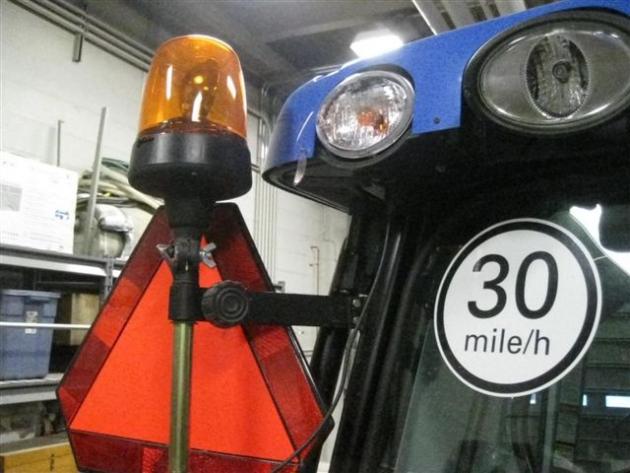
To increase the visibility of your agricultural equipment, you can use slow moving vehicle (SMV) emblems, as well as marking accessories and fully functioning lighting. Although lighting and marking accessories are necessary anytime you have equipment on a public road, they are especially important 30 minutes before sundown or 30 minutes after sunrise. For added safety on narrow roads, you may consider having an escort vehicle drive in front of you. On winding roads, you may wish to have an escort drive behind you. 

SMV Emblem

SMV

SMV

(Source: Pennsylvania State University. Agricultural Safety and Health)

An SMV emblem is a highly reflective sign that should be placed on the back of all tractors, towed implements, and self-propelled implements. It is an equilateral triangle at least 14 in. in height, made from a fluorescent orange material (which provides visibility during the day) and bordered by red retroreflective material (which provides visibility at night). 

Laws concerning SMV emblems vary by state—most states require SMV emblems on all implements of husbandry (agricultural machinery) traveling at speeds of less than 25 mph. Farmers and ranchers are responsible for the proper use and maintenance of SMV emblems. Check the laws in your state for specific regulations.

The placement of an SMV emblem is critical to its effectiveness. Adhere to the following guidelines when affixing an SMV emblem:

  • Place the emblem at the rear of the vehicle or implement, with the triangle pointing upwards.
  • As much as possible, center the emblem horizontally on the vehicle.
  • Make sure the bottom edge of the triangle is from 2 to 10 ft. above the ground. 

An SMV emblem can become covered with dirt; over time, it can fade due to sun exposure. To maintain the best reflective properties, regularly clean and replace SMV emblems. 

The only appropriate use of an SMV emblem is to increase the visibility of agricultural equipment traveling on public roadways. Do not use an SMV emblem for any other purpose (such as marking a driveway).

Speed Indicator Symbol

SIS Emblem

SIS Emblem

(Source: Pennsylvania State University. Agricultural Safety and Health)

Some tractors can travel faster than 25 mph. Mount a speed indicator symbol (SIS) on the rear of such tractors to indicate their maximum speed. Some states are now debating amending the SMV regulations to encompass faster tractors. Your state’s farm bureau can provide updates about such efforts.

Reflective Tape and Lighting

Puma 150 Tractor with RB565 Round Baler from Case IH Media Library

Puma 150 Tractor with RB565 Round Baler. Photo Source: Case IH.

The American Society of Agricultural Engineers (ASAE) has developed guidelines and recommendations for lighting and marking farm equipment for roadway travel. The lists below summarize the most important recommendations for increasing the visibility of self-propelled and towed equipment.

Self-Propelled Equipment

  • Headlamps and taillights: Equipment should have two headlamps and two taillights. At each end of the equipment, the lights should be mounted at the same height and spaced as far apart as possible on either side of the center line of the equipment.
  • Work lamps: Equipment should have work lamps, but rear-facing work lamps should not be used while on roadways.
  • Warning lights: Any vehicle or towed equipment with a width of 12 ft. or more should have flashing amber lights located on its sides. The lights should flash in unison at a rate of 60 to 85 flashes per minute.
  • Turn indicators: Equipment should have turn indicators in addition to red taillights.
  • 7-terminal receptacle: Any tractor or truck used for towing should be equipped with a 7-terminal receptacle to power lights on a trailing piece of equipment.

Towed Equipment

  • Rear reflectors: The widest part of the rear extremities of the equipment should be outfitted with red reflectors to ensure visibility from up to 600 ft. behind the equipment.
  • Front reflectors: The front left and right sides of the equipment should have yellow reflectors.
  • Reflective and fluorescent (conspicuous) material: Equipment should be marked with a combination of reflective and fluorescent material. Yellow conspicuous material should be used in the front, and red-orange reflective material should be used to outline the back.
  • SMV emblem: An ASAE-approved SMV emblem should be attached at the center, or slightly to the left of the center, of the back of the equipment.


Use the following format to cite this article:

Increasing the Visibility of Agricultural Equipment on Public Roadways. (2012) Farm and Ranch eXtension in Safety and Health (FReSH) Community of Practice. Retrieved from http://www.extension.org/pages/65225/increasing-the-visibility-of-agricu….


Sources

Agricultural equipment on public roads. (2009) Committee on Agricultural Safety and Health Research and Extension. Retrieved fromhttp://nasdonline.org/static_content/documents/2065/d001906.pdf.

Hallman, E. and Abend, E. (2005) Roadway safety: Lighting & marking of agricultural equipment. Cornell Cooperative Extension. Retrieved from http://nasdonline.org/1878/d001821/roadway-safety-lighting-and-marking-o….

Hanna, M., Schwab, C., and Miller, L. (2000) A new look for farm safety: Reflective and fluorescent tape. Iowa State University Extension and Outreach. Retrieved from https://store.extension.iastate.edu/ItemDetail.aspx?ProductID=758.

Legault, M. (2002) National farm safety and health week… Not just for farmers anymore part II. The National Education Center for Agricultural Safety. Retrieved from http://nasdonline.org/document/201/d000149/farm-safety-and-health-week-not-just-for.html.  

Petrea, R. (n.d.) Forage harvesting safety. University of Illinois Extension. Retrieved from http://web.extension.illinois.edu/agsafety/factsheets/fhs.cfm.


Contributor, Reviewers and Summarized by:                       
Linda M. Fetzer, Pennsylvania State University  lmf8@psu.edu
Dennis J. Murphy, Pennsylvania State University  djm13@psu.edu
William C. Harshman, Pennsylvania State University (Has since retired)
Charles V. Schwab, Iowa State University – cvschwab@iastate.edu
Aaron M. Yoder, University of Nebraska Medical Center – aaron.yoder@unmc.edu

How should I check for leaks in hydraulic hoses?

When pinhole leaks develop in hydraulic lines, take the following steps to identify the locations of leaks and avoid injury: 

  • Before looking for the leak, shut off the power source to the hydraulic pump, and lower the implement to the ground.
  • Relieve the pressure of the hydraulic system by moving the hydraulic control lever back and forth.
  • To locate the leak, pass a piece of cardboard or mirror over the area where you suspect the leak.
  • Fix the leak immediately.

Never use your hand to check for a hydraulic leak. Hydraulic fluid can be under pressures of between 1,000 and 3,000 pounds per square inch (psi). Fluid under this pressure can penetrate the skin, necessitating immediate medical attention.

For more information about hydraulic safety, click on the article title below:

Hydraulic Safety