What is anhydrous ammonia and is it dangerous?

Anhydrous ammonia (NH3) is an effective nitrogen fertilizer used extensively on field-corn acreage in the Midwest.

Exposure to anhydrous ammonia is very dangerous because the gas is a hygroscopic compound that seeks moisture from the nearest source, which can be the moisture-laden tissue of the human body. Exposure of high-moisture-content areas of the body—including eyes, lungs, and mucous membranes—is especially dangerous. After exposure to anhydrous ammonia, it is extremely important to flush these areas immediately with potable water for at least 15 minutes. Inhalation of anhydrous ammonia gas can cause a person’s throat to swell shut, leading to suffocation. Victims of anhydrous ammonia exposure should seek medical attention immediately.

For more information, click here to link to the article “Anhydrous Ammonia Safety.”

Why do combines catch fire?

Combines typically catch fire for two reasons, both of which are preventable:

  • Fires can be caused by the ignition of trash and debris (leaves, chaff, stalks, and other organic material) that build up around the engine, exhaust, or other machine parts that get hot during normal operations.
  • Fires can be caused by a leak in a combine’s fuel or hydraulic system. Fuel or hydraulic fluid can ignite when it comes in contact with something hot, such as an engine’s muffler and exhaust system. 

Farm insurers consider combine fires one of the most common and expensive types of fire incidents in production agriculture. Many combine fires are extremely dangerous because they occur in the mechanisms behind the operator’s station. When such fires start, they are difficult to see, and by the time they are visible, they are intense and difficult to extinguish. Combines should be equipped with at least two readily accessible ABC fire extinguishers that an operator can reach and use before a fire becomes uncontrollable.

What guards need to be in place to help prevent entanglement with a tractor’s PTO driveline?

Properly positioned guards and shields that undergo regular maintenance are important safety features that help prevent entanglement with PTO drivelines. However, guards and shields alone are not enough to prevent an entanglement incident. Operator awareness and constant caution are critical to avoiding power take-off (PTO) entanglement injuries.

Driveline Components

Driveline Components. Photo Source: Virginia Tech

The major components of PTO systems. Reproduced from Grisso, B. (2009, Machinery Safety on the Farm, Virginia  Cooperative Extension http://pubs.ext.vt.edu/442/442-092/442-092.html)

The master shield of a tractor, located at the rear of the tractor over the PTO stub shaft, is the first shield along the PTO driveline. When installed and used properly, the master shield prevents the operator from coming into contact with the universal joint of an implement driveline, as well as the stub shaft. When operating a PTO-driven implement with your tractor, you should encase the shaft in a driveline shield: a plastic or metal casing supported by bearings at each end of the shaft. The bearings allow the shield to stop spinning if someone or something comes into contact with the driveline while the shaft inside continues to spin. The ends of the driveline shield are bell-shaped to cover the universal joints of the shaft. Because universal joints are irregularly shaped and prone to snag objects, operators should never modify the bell-shaped shield in an effort to make maintenance, greasing parts, or connecting the shaft easier.

It is very important to perform a walk-around inspection of your tractor before and after your work day to make sure that all necessary guards and shields are securely in place.

Resources

Howard J. Doss, with the Michigan State University Extension, provides some keys to PTO safety. You can access this information at http://nasdonline.org/document/1295/d001094/shield-yourself-from-pto-dangers.html.

Other documents on PTO safety can be found at http://nasdonline.org.


NCERA 197: Agricultural Equipment on Public Roads

Use the following format to cite this article:

NCERA 197: Agricultural Equipment on Public Roads. (2012) Farm and Ranch eXtension in Safety and Health (FReSH) Community of Practice. Retrieved from http://www.extension.org/pages/64718/ncera-197:-agricultural-equipment-o….


In areas where rural and urban settings come together, motorists are more likely to encounter agricultural equipment and vehicles on public roads. In 2007, the North Central Education/Extension Research Activity (NCERA) 197 committee identified the operation of agricultural equipment on public roads as an agricultural safety and health priority area in need of further research and awareness. 

The committee reviewed research and engineering standards and identified extension and outreach and policy priorities related to the operation of agricultural equipment on public roads. The lists below outline the committee’s major recommendations in these areas.

Research and Development

  • To improve understanding of the characteristics of crashes between motor vehicles and agricultural machines or equipment, reporting and investigative agencies should develop and use standardized reporting terminology.
  • Researchers should prioritize the determination of best practices for lighting and marking agricultural equipment and vehicles (such as the use of slow moving vehicle [SMV] emblems on animal-drawn buggies).
  • As use of high-speed tractors, self-propelled machines, and towed equipment increases, engineers must improve and adapt braking and steering systems, tires, and rollover protective structures (ROPS) for high-speed machinery and equipment.
  • Researchers, officials, and agricultural safety and health leaders and experts should examine driver education curricula, which are not standardized nationally, to evaluate the level of instruction students receive about sharing roadways with agricultural equipment.
  • Researchers should examine the effectiveness of graduated licensing for youth operating agricultural equipment on public roadways.

Engineering Standards

  • Organizations and entities that formulate engineering design standards should base standards more directly on research findings. Engineers should collaborate with researchers and end users when developing and designing agricultural equipment.
  • When designing machinery and equipment, engineers should apply standards that require automatic and passive protection for drivers and riders operating agricultural equipment on public roads.
  • Designers and manufacturers should continually consider ways in which new technologies can be incorporated in the design standards and applications of agricultural equipment.

Safety Programs

  • Safety programs must balance the educational effort by educating both agricultural workers and the general public about:
    • best practices for operating farm equipment on roadways, 
    • the purpose and usage of SMV and speed indicator symbol (SIS) emblems, and
    • the ways exclusions and exemptions of agricultural equipment from traffic regulations impact the interaction of vehicles and agricultural equipment on roadways.
  • Safety programs should work with local and state law-enforcement agencies to increase officers’ awareness of laws related to farm equipment.
  • Safety program personnel should work with manufacturers of Amish buggies to encourage the use of marking and lighting systems that meet current standards developed by the American Society of Agricultural and Biological Engineers (ASABE), the Society of Automotive Engineers (SAE), and the Department of Transportation (DOT).

Policy

  • State policies should promote the comprehensive explanation of SMV and SIS emblems in driver’s manuals and as part of driver education programs.
  • A more comprehensive Uniform Vehicle Code (UVC) should be developed and adopted both nationally and at state levels. The new code should address modern types of agricultural equipment and the use of such equipment on roadways. Details of the code should include:
    • required registration of farm equipment for roadway use,
    • necessary qualifications and training for operators of agricultural equipment, and
    • regulations regarding the use of animal-drawn buggies, wagons, and equipment.
  • Policies should ensure consistent funding for research into the hazards of operating agricultural equipment on roadways and the best safety practices for the operation of farm equipment on public roads.
  • State and local governments should establish land-use policies to manage the interactions between farming and nonfarming vehicles on public roads.
  • Policies should encourage stricter enforcement by local and state police of proper SMV emblem usage.

Resources

Click here to review the NCERA 197 publication Agricultural Equipment on Public Roads, which explains the committee’s findings in their entirety.

For more information about the topics discussed in this article, click the links to the following articles:


Use the following format to cite this article:

NCERA 197: Agricultural Equipment on Public Roads. (2012) Farm and Ranch eXtension in Safety and Health (FReSH) Community of Practice. Retrieved from http://www.extension.org/pages/64718/ncera-197:-agricultural-equipment-o….


Reviewed and Summarized by:
Linda M. Fetzer, Pennsylvania State University – lmf8@psu.edu
Dennis J. Murphy, Pennsylvania State University – djm13@psu.edu
Aaron M. Yoder, University of Nebraska Medical Center – aaron.yoder@unmc.edu

Hydraulic Safety


Use the following format to cite this article:

Hydraulic safety. (2012) Farm and Ranch eXtension in Safety and Health (FReSH) Community of Practice. Retrieved from http://www.extension.org/pages/64565/hydraulic-safety.

Hydraulic systems on agricultural equipment are used to complete such maneuvers as lifting the buckets on skid steers or adjusting the position of combine headers. Hydraulic fluid moves through very small openings within an operating system, and it is under tremendous pressure that can exceed 2,000 pounds per square inch (psi). Some newer and larger pieces of equipment have hydraulic systems with pressures that exceed 3,000 psi. (Running water from a household faucet typically measures 40 psi.)

Hazards

Hydraulic systems and hydraulic fluid can be hazardous to workers in several common scenarios.

Improper Couplings

Never mix low- and high-pressure coupler components (that is, do not connect a low-pressure component to a high-pressure system). Mismatched componenets may cause a rupture in a hose or fitting.

Pinhole Leaks

Never use your hand to locate a leak in a hydraulic line. Because hydraulic fluid—often oil—is highly pressurized, compressed fluid released through a leak can penetrate the skin or eyes, causing severe injury, such as gangrene. Injection injuries from high-pressure hydraulic fluid require immediate medical care.

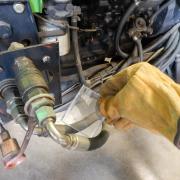
When trying to locate a leak in a hydraulic line, wear eye protection and gloves. Run a piece of paper, wood, cardboard, or Plexiglas along the hydraulic line (as shown below) to determine the location of the leak. Always relieve the hydraulic pressure in an operating system before detaching or attaching a hydraulic line to make necessary repairs.

Hydraulic Check with Plexiglass

(Source: Pennsylvania State University. Agricultural Safety and Health)

Component Removal or Adjustment

Release the hydraulic pressure in an operating system prior to removing or adjusting components. The hot fluid in the system is under extreme pressure. If a worker is exposed to hydraulic fluid while removing or adjusting components, he or she may sustain burns, bruises, cuts, abrasions, or injection of fluid into the skin.

Maintenance

Proper maintenance is critical for all types of machinery and equipment, but it is imperative that you follow proper safety measures when performing maintenance.

  • Wear personal protective equipment (PPE) when performing maintenance on hydraulic systems, including gloves and eye protection.
  • Do not rely solely on the hydraulic lift if you must work on hydraulic components with the system raised. Set the working unit on blocks as a precautionary measure.
  • Unless you are bleeding the hydraulic system, do not run the machine engine when you are servicing the system.
  • Hydraulic fluid can be extremely hot and can cause severe burns, so let the hydraulic system cool before changing lines, connections, filters, or fittings.
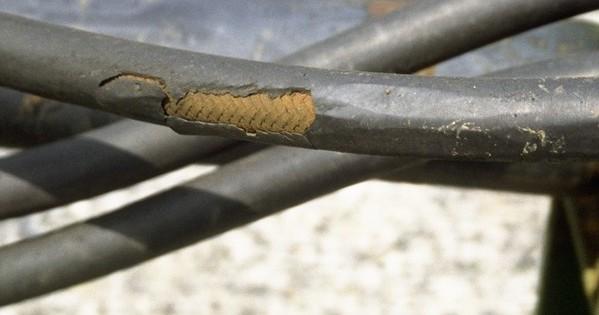
Bad Hydraulic Hose

Bad Hydraulic Hose

(Source: Pennsylvania State University. Agricultural Safety and Health)


  • Regularly examine the hydraulic lines for leaks and wear (as shown above). 
  • Coat the cylinder rods with a lubricant that provides rust protection.
  • Periodically replace filters, and keep hydraulic oil away from contaminants; dirt is the biggest culprit in hydraulic system damage.
  • Before removing the cylinders from working units, make sure that the units are resting on the ground, safety stands, or safety blocks and that the engine is shut off.
  • Use a chain hoist, floor jack, or other type of assistive device if you need to remove heavy hydraulic pumps or control valves.

Safe Operating Procedures

Follow these recommendations when using equipment with hydraulic systems:

  • Before leaving the machine, lower the hydraulic work unit to the ground and relieve hydraulic pressure by moving the control valve back and forth several times.
  • Park the machine in an area where children are unlikely to come into contact with it.
  • To keep the machine in place during transportation, lock the cylinder stops.
  • Use cylinder stops, locks, or blocks for raised equipment or components when servicing hydraulic components or performing maintenance.
  • To reduce the risk of escaping oil, make sure all the line connections within the system are tight.
  • Use a nonvolatile cleaning solution when washing parts.
  • Keep hydraulics properly adjusted for better control of the machine.


Use the following format to cite this article:

Hydraulic safety. (2012) Farm and Ranch eXtension in Safety and Health (FReSH) Community of Practice. Retrieved from http://www.extension.org/pages/64565/hydraulic-safety.

Sources

American Society of Agricultural and Biological Engineers (ASABE). (2008) ASAE S489 Hydraulic pressure available on agricultural tractors for remote use with implements. St. Joseph, MI. Retrieved from https://elibrary.asabe.org/.

Ayers, P. (n.d.) Hydraulic systems safety. Colorado State University Extension. Retrieved from http://nasdonline.org/static_content/documents/1100/d000891.pdf.

Harshman, W., Yoder, A., Hilton, J., and Murphy, D. (2012) Implements with hydraulic components: HOSTA Task Sheet 5.5. Pennsylvania State University Department of Agricultural and Biological Engineering. Retrieved from http://www.extension.org/sites/default/files/NSTMOP%20Task%20Sheets%20Se….

Safe use of hydraulic systems. (2006) The Ohio State University Extension, Tailgate Safety Training for Landscaping and Horticultural Services. Retrieved from http://nasdonline.org/139/d001703/safe-use-of-hydraulic-systems.html.

Safety management for landscapers, grounds-care businesses and golf courses (1st ed.). (2001) Moline, IL: John Deere Publishing.

 
Reviewed and Summarized by:
Linda M. Fetzer, Pennsylvania State University – lmf8@psu.edu
William C. Harshman, Pennsylvania State University (Has since retired)
Jason Lamm, Donegal Insurance Group  jgl134@gmail.com
Dennis J. Murphy, Pennsylvania State University (Has since retired)
Aaron M. Yoder, University of Nebraska Medical Center – aaron.yoder@unmc.edu

Agricultural Safety and Health Council of America

ASHCA Logo

(ASHCA Logo. Source: Agricultural Safety and Health Council of America

In 2007, the nonprofit Agricultural Safety and Health Council of America (ASHCA) was formed to address new and ongoing safety and health issues affecting production agriculture. Members of this organization include producers, agribusinesses, insurance companies, government organizations, medical professionals, farmworkers, and safety professionals.

The mission of ASHCA is to proactively address ongoing and emerging occupational safety and health issues affecting U.S. agriculture.

Council Goals:

  • Pursue national strategies, based on reliable data and information about emerging issues, to reduce agricultural injuries and fatalities
  • Work with leaders representing producers, agribusinesses, insurance companies, safety associations, and other organizations to guide the development of effective delivery systems for safety and health information
  • Influence research priorities to rapidly identify best management practices for worker safety and health

ASHCA is governed by a board of directors, the majority of whom have a background in industry. Standing committees include membership, strategic planning and programming, and public relations. ASHCA hosts annual meetings and conferences, and provides workshop presentations on its Web page.

ASHCA provides opportunities to learn about:

  • best practices for creating a safety culture among agricultural workers,
  • the impacts of safety on profitability and job satisfaction, and
  • working with other leaders to serve as the “voice” of safety and health issues for farm and ranch producers and agricultural workers.

For more information about ASCHA, click here to be directed to their home page. From the home page, you can learn about membership options, conferences, and resources.


Use the following format to cite this article:

Agricultural Safety and Health Council of America. (2012) Farm and Ranch eXtension in Safety and Health (FReSH) Community of Practice. Retrieved from http://www.extension.org/pages/64420/agricultural-safety-and-health-council-of-america.

 
Reviewed and Summarized by:
Linda M. Fetzer, Pennsylvania State University – lmf8@psu.edu
Dennis J. Murphy, Pennsylvania State University – djm13@psu.edu
Carla Wilhite, University of New Mexico  CWilhite@salud.unm.edu
Aaron Yoder, University of Nebraska Medical Center – aaron.yoder@unmc.edu
 

Safety Checklists for Used Farm Equipment

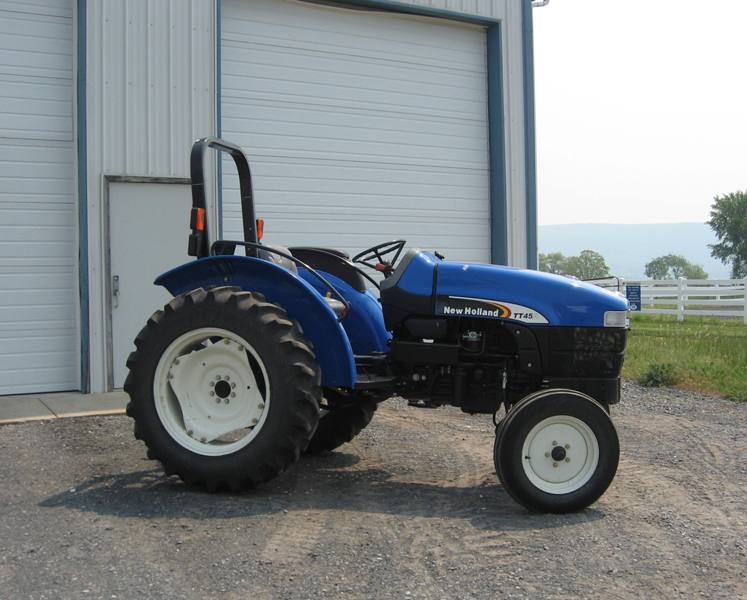
Ford New Holland Tractor

New Holland Tractor with ROPS

(Source: Pennsylvania State University. Agricultural Safety and Health)


Use the following format to cite this article:

Safety checklists for used farm equipment. (2012) Farm and Ranch eXtension in Safety and Health (FReSH) Community of Practice. Retrieved from http://www.extension.org/pages/64392/safety-checklists-for-used-farm-equipment.  


Purchasing used equipment may be a cost-effective option for adding or replacing equipment on your farm or ranch. Before you make an investment in used equipment, however, you should consider the following questions:

  • Is there any reason that you should consider new rather than used equipment?
  • Is there a new model available that has beneficial safety features or updated technology? 
  • Does your lending agency have any special stipulations or requirements, such as appraisals, that make buying used equipment less cost-effective or feasible?
  • Does the used equipment meet the requirements—horsepower, towing capability, and so on—of the jobs that you need to complete?
  • How many hours have been logged on the equipment, and what is the typical “wear-out” life for the particular piece of equipment? (See table 1 for typical wear-out life, in hours, for different types of agricultural equipment.) 
Table 1. Machinery Wear-Out Life in Hours
Machinery Wear-Out Life (hours)
Tractors 12,000
Crawlers 16,000
Combines 2,000
Cotton pickers 2,000
Drills 1,000
Planters 1,000
Plows 2,000
Swathers 2,000
Tillage equipment 2,000

Source: Table provided by Dr. Jim Rumsey, Lecturer, Department of Biological and Agricultural Engineering, University California, Davis.

Used equipment can be cost-effective, but before purchasing used equipment, it is extremely important that you examine the equipment and consider factors such as affordability, dependability, safety, usability, and compatibility before making a final decision.

Resources

The following links provide additional information, including safety checklists, to consider as you decide whether to buy a piece of used equipment:


Use the following format to cite this article:

Safety checklists for used farm equipment. (2012) Farm and Ranch eXtension in Safety and Health (FReSH) Community of Practice. Retrieved from http://www.extension.org/pages/64392/safety-checklists-for-used-farm-equipment


Citations

Jarrett, V. (n.d.) Buying a used farm machine: Farm machinery fact sheet FM-02. Utah State University Cooperative Extension. Retrieved from  http://extension.usu.edu/files/publications/factsheet/FM-02.pdf.

Jarret, V. (n.d.) Checklist for Used Tractors: farm machinery fact sheet FM-04. Utah State University. Retrieved from http://extension.usu.edu/files/publications/factsheet/FM-04.pdf.

Rumsey, J. (1998) Small farm news fall 1998. UC Small Farm Program. Retrieved from http://sfp.ucdavis.edu/pubs/SFNews/Fall98/farmequip/.


Reviewed and Summarized by:
Glen Blahey, Canadian Agricultural Safety Association  gblahey@casa.acsa.ca
Linda M. Fetzer, Pennsylvania State University  lmf8@psu.edu
William Harshman, Pennsylvania State University (Has since retired)
Dennis J. Murphy, Pennsylvania State University  djm13@psu.edu
Aaron M. Yoder, University of Nebraska Medical Center – aaron.yoder@unmc.edu


Livestock Trailer Safety


Photo of herd of beef cows

Photo provided by the Central States Center for Agricultural Safety and Health (CS-CASH)


Use the following format to cite this article:

Livestock trailer safety. (2012) Farm and Ranch eXtension in Safety and Health (FReSH) Community of Practice. Retrieved from http://www.extension.org/pages/64391/livestock-trailer-safety


Towing a livestock trailer is a common practice on most farms and ranches. Livestock trailers, also referred to as stock trailers, are used to move livestock between locations, haul show animals to county fairs, and transport animals to processing plants.

To safely tow a livestock trailer, your truck must be capable of towing the weight of the trailer plus the added weight of the livestock. Check with the manufacturer to determine the Gross Combined Vehicle Weight (GCVW), which includes the tow vehicle’s weight plus the loaded trailer weight. The GCVW rating can be located in the vehicle’s serial number or in the operator’s manual. When calculating the weight, remember to include the weight for fuel, passengers, and cargo.

The manual for the trailer should specify a maximum tongue weight—the amount of the trailer’s weight that presses down on the truck’s trailer hitch when using a bumper pull trailer or the truck’s bed when using a gooseneck trailer. The majority of the weight (85% to 90%) should be carried over the axles so that only 10% to 15% of the weight is carried on the tongue.

Before using a livestock trailer, check both the truck and the trailer to ensure that they are in good working condition. In addition, take the following actions:

  • Latches and safety chains: Double check the latches and the safety chains and cables between the truck and trailer to make sure they are fastened securely. Make sure you are using a ball that is the correct size for the trailer.
  • Trailer brakes: Inspect the breakaway cable or brake system. Manufacturers recommend that any trailer exceeding 1,000 lb. have its own brake system, but you should also check state regulations regarding brake system requirements.
  • Wheel bearings: Repack the wheel bearings on a regular basis and replace as necessary.
  • Electric Wiring and Connections: Make sure all wiring is in good condition. Trailer connectors should match the truck connectors. Check to make sure that all the lights (brake light, turn signals, and tail lights) on both the truck and the trailer are working. Make sure the electrical connection is securely plugged into the truck.
  • Tires: Examine the tires for signs of dry rot, wear, or damage, and make sure that all tires, including the spare and inside dual tires, have the correct air pressure. Consider replacing tires at least every five years, regardless of use.
  • Lug nuts: Inspect the lug nuts regularly to ensure they are properly tightened.
  • Trailer: Inspect the trailer floor to make sure it is sturdy and clean. If more traction is needed, install rubber matting. Consider replacing floor boards that are showing signs of wear or rot.
  • Battery: If you use battery-powered accessories, ensure that your emergency battery is charged and ready for use.
  • Brake controllers: Test your brake controllers and make adjustments as needed depending on the weight of your trailer.

    • The first step in testing your electric brakes is to locate the controller or adjustor, which is typically located beneath the instrument panel on the tow vehicle. The controller has an adjustment button (+ or -) and sliding lever. You may need to use the controller to increase braking power (+) for heavier loads or decrease braking power (-) for lighter loads.
    • Once you have located the controller, slowly move forward on a level surface and shift the tow vehicle transmission to neutral. Use the slide lever on the brake controller to bring the load to a stop using the trailer brakes.
    • If the trailer brakes cause the truck to jerk, your trailer brakes are adjusted too high. Lower the braking power on the trailer until the trailer comes to a smooth stop. If the truck and loaded trailer do not slow to a stop, the brake controller must be adjusted to a higher level.

Loading the Trailer

Loading animals into a trailer can sometimes be a frustrating task, but there are steps you can take to make the task safer and, ideally, easier. For example, lower the back of the trailer as much as possible so that animals may step into the trailer without having to step up. Remember to be patient and calm during the loading process so that you do not scare or stress the animals. Additional recommendations include the following:

  • Weight distribution: When using a bumper pull trailer, place the heaviest animals in the front of the axles. Load older and larger animals first, followed by younger and smaller animals.
  • Ties: When tying animals in the trailer, use slip knots and tie securely at head height in the trailer.
  • Visibility: Make sure animals can see you when you enter and exit the trailer, when you are in the trailer, and when you tie or untie them.
  • Squeeze and pinch points: Remain alert to the danger of being pinned between animals and trailer sides and being pinched by the trailer gate.
  • Gates: Once the animals are loaded into the trailer, quickly close the gates and ensure that they are secure.
  • Protrusions: Inspect the trailer for broken or sharp objects protruding into the trailer. These items should be repaired immediately to prevent an injury to an animal or operator.

Traveling

When driving on any roadway, always maintain a safe speed, keep your headlights on, and stay alert. Your braking time increases when you are towing a full trailer, so maintain a safe distance from the vehicle in front of you and leave adequate room to stop. Plan your travel time carefully, and be aware that weather can cause delays by impacting road conditions and animal comfort.

Do not lock the the trailer when you are transporting animals. In the event of an emergency, rescue workers will be able to more quickly gain access to an unlocked trailer. For your animals’ safety, do not allow them to hang their heads out of the trailer, where they could be injured by flying objects.

Resources

View the video below about cattle trailer safety from Right from the Start: Safety Awareness for the Next Generation of Livestock Producers series from the Southwest Center for Agricultural Health, Injury Prevention, and Education.

View the video below about horse trailer safety from Right from the Start: Safety Awareness for the Next Generation of Livestock Producers series from the Southwest Center for Agricultural Health, Injury Prevention, and Education.

For more information about cattle handling, click here to view the article “Beef Cattle Handling Safety.”


Use the following format to cite this article:

Livestock trailer safety. (2012) Farm and Ranch eXtension in Safety and Health (FReSH) Community of Practice. Retrieved from http://www.extension.org/pages/64391/livestock-trailer-safety.


Sources


Harshman, W., Yoder, A., Hilton, J., & Murphy, D. (2011) Loading and towing equipment on a trailer. HOSTA Take Sheet 6.6. The Pennsylvania State University. Retrieved from http://articles.extension.org/sites/default/files/Version%203.%20January….

Livestock trailer safety. (2012) Southwest Center for Agricultural Health, Injury Prevention, and Education. Retrieved fromhttp://www.icontact-archive.com/azw1uozM3S6dBZdhk63AHPzSSxpsq733?w=3.

Ross, D. (2011) Take livestock transportation safety seriously. DairyHerd Network. Retrieved from http://www.dairyherd.com/dairy-news/Take-livestock-transportation-safety-seriously-133954798.html.

Smith, K. (n.d.) 14 trailer safety tips. Hobby Farms.com. Retrieved from http://www.hobbyfarms.com/farm-equipment-and-tools/trailer-safety.aspx.


Contributors, reviewers and summarized by:
Linda M. Fetzer, Pennsylvania State University – lmf8@psu.edu
William C. Harshman, Pennsylvania State University (Has since retired)
Kerri Ebert, Kansas State University  kebert@ksu.edu
Jimmy Maass, Virginia Farm Bureau Insurance (Has since retired)
Dennis J. Murphy, Pennsylvania State University (Has since retired)
Aaron M. Yoder, University of Nebraska Medical Center – aaron.yoder@unmc.edu

Dangers of Silo Gases


Use the following format to cite this article:

Dangers of silo gases. (2012) Farm and Ranch eXtension in Safety and Health (FReSH) Community of Practice. Retrieved from http://articles.extension.org/pages/64390/dangers-of-silo-gases.


After harvested forages are placed in a silo, they often produce gases during the early stages of the fermentation process. Silo gases are difficult to detect because they are almost invisible, but signs of such gases may include:

  • the formation of a faint yellow or red haze that appears from the top of a conventional silo to the bottom of the ladder chute, 
  • staining on the silo and silage, and
  • a bleach-like odor that may be present even at the base of the silo and in the milking parlor.

If you detect silo gases, leave the area immediately. Physical reactions to silo gases may not be noticeable immediately after your exposure, but damage to your lungs may have already occurred. (Click here to learn more about respiratory illnesses related to farming practices in production agriculture.)

The most common silo gases are carbon dioxide (CO2and nitrogen dioxide (NO2). Types and concentrations of silo gas vary depending on whether the silo is a conventional silo or oxygen-limiting silo and how much time has passed since the silage was placed in the silo.

Conventional Silos

Conventional Silo

Conventional Silo

(Source: Pennsylvania State University. Agricultural Safety and Health)

Conventional silos are often constructed of concrete staves held together with steel hoops, but some are made of reinforced concrete, steel, galvanized tile, or brick.

The most abundant type of gas in a conventional silo is nitrogen dioxide, which has a bleach-like odor and produces low-lying yellow, red, or dark brown fumes. Because it is heavier than air, nitrogen dioxide settles on top of the silage or flows down the chute and collects in adjoining feed rooms or other low-lying areas in the barn near the base of the silo.

Nitrogen dioxide begins to form within hours after the forages are ensiled, with the amount of gas peaking about three days after harvest. From that point, the amount of gas begins to decrease rapidly.

Nitrogen dioxide is harmful because it causes severe irritation to the nose and throat, which can lead to lung inflammation. After low-level exposure to nitrogen dioxide, a person may experience very little immediate pain or discomfort but may later suffer from fluid collection in the lungs that may be fatal. Prolonged or recurring pneumonia-like symptoms can occur two to six weeks after initial exposure. Any person who has been exposed to any level of nitrogen dioxide, for even a short period of time, should seek immediate medical attention.

Oxygen-Limiting Silos
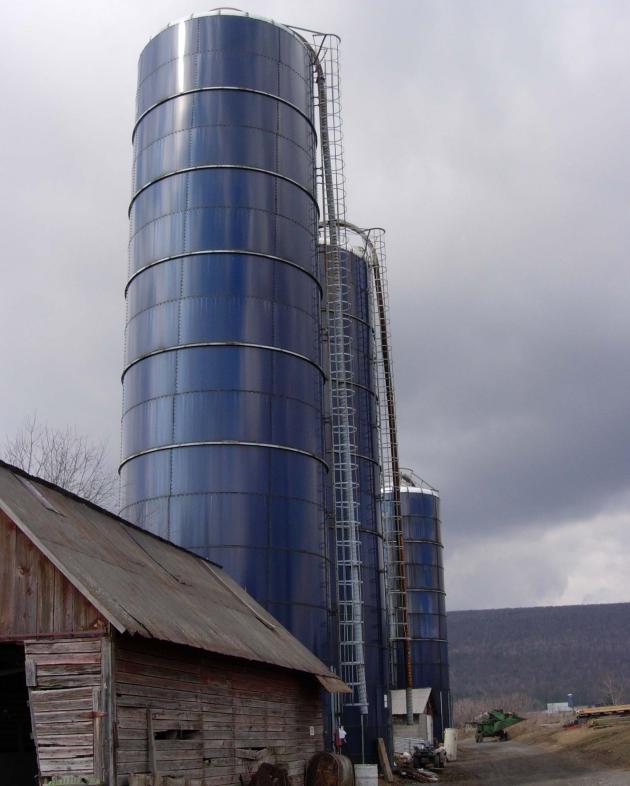
Silos

(Source: Pennsylvania State University. Agricultural Safety and Health)

An oxygen-limiting silo is constructed of dark blue or green enamel-coated steel, poured reinforced concrete, or concrete staves. Oxygen-limiting silos are designed so that entering the silo is typically unnecessary. 

In this type of silo, the fermentation process produces both nitrogen dioxide and carbon dioxide. The conditions in an oxygen-limiting silo promote greater production of carbon dioxide, which helps maintain high-quality silage.

Carbon dioxide is an odorless and colorless gas that displaces the life-sustaining oxygen in a silo. When levels of carbon dioxide are high, a person may have little warning before being overcome by this gas. 

Modified Oxygen-Limiting Silo

A modified oxygen-limiting silo is an oxygen-limiting silo that has been modified with a different type of unloading system. The unloading system is located on the top of the silage and unloads through a hollow center chute. An oxygen-limiting silo can also be modified with the addition of a conventional top-unloading system, unloading doors, and a chute along the outside of the silo tower. Silos with a top-unloading system typically have a domed roof to provide space for the tripod that suspends the unloader.

As in an unmodified oxygen-limiting silo, the respiration and fermentation process converts the oxygen in the silo into carbon dioxide. The design of a modified oxygen-limiting silo typically makes entry unnecessary.  

Decreasing the Risk of Exposure to Silo Gases in Conventional Silos

  • Ventilation: When you use a conventional silo on your farm or ranch, ventilation is the best defense against nitrogen dioxide buildup in areas of your barn and the best away to lower the risk to your livestock.

    • Provide adequate ventilation in and around your silo during the first 72 hours of silage fermentation and for at least two to three weeks after filling the silo.
    • Keep the door between the silo room and the barn closed.
    • Consider using barn exhaust fans to blow air into the silo or feed room to decrease quantities of silo gases that may have flowed down the chute.
  • Timing: Avoid the silo during critical periods when silo gases are forming. Gas concentrations are highest between 12 and 72 hours after filling.

    • If at all possible, do not enter the silo for two to three weeks after filling because of the high level of silo gases. If you must enter the silo during that time to level silage or set up an unloader, enter immediately after the last load is in and before the fermentation process begins—a period that may be only a few hours. (Follow the same precautions below if entry is required within four to six weeks after filling.)
      • Prior to entry, run the silo blower for 15 to 45 minutes and keep it running while you are in the silo.
      • Wear a self-contained breathing apparatus (SCBA) and a harness attached to a lifeline and anchor point.
      • Always maintain visual contact with a second person outside the silo.
      • If the level of the silage is low, a silo blower will not provide enough ventilation to dilute the silo gases. Do not enter the silo without wearing an SCBA.
    • Prior to entering any silo at any time, make sure that the power supply for all unloading mechanisms is locked out.
  • Personnel: Never enter a silo unless there is another person present outside the silo who can quickly get help if necessary. This person should maintain visual contact with you at all times because if you are overcome by silo gas, you may not be able to call out for assistance.
  • Personal Protective Equipment (PPE): If, in an emergency, it is necessary to enter a silo containing silage, the individual entering the silo must wear an SCBA. Click here to learn more about respiratory protection equipment. 
  • Signage: Post appropriate signage warning people of the potential for silo gases. By posting “Danger—Deadly Silo Gas” signs around the base of the silo, you are warning visitors, family members, and workers to stay away from the area.

Additional Recommendations

  • Keep children away from the silo and adjoining areas during filling and for at least two weeks after.
  • When uncovering the filler opening, stay positioned on the ground and use a rope to pull the cover off the filler opening. Remove the cover several days before you start using the silage.
  • If you begin to cough or experience throat irritation while working near a silo, move to a source of fresh air immediately.
 

Use the following format to cite this article:

Dangers of silo gases. (2012) Farm and Ranch eXtension in Safety and Health (FReSH) Community of Practice. Retrieved from http://articles.extension.org/pages/64390/dangers-of-silo-gases.


Sources


Atia, A. (2004) Silo gas (NO2) safety. Agri-Facts. Retrieved from http://www1.agric.gov.ab.ca/$department/deptdocs.nsf/all/agdex9036/$file/726-1.pdf?OpenElement.

Cyr, D. and Johnson, S. (2002) Upright silo safety. University of Maine Cooperative Extension. Retrieved from http://umaine.edu/publications/2305e/.

McFadden, M. (2011) Beware of silo gases. Michigan State University Extension. Retrieved from http://news.msue.msu.edu/news/article/beware_of_silo_gas.

Murphy, D. (2013) Silo gases—the hidden danger. Pennsylvania State University Cooperative Extension. Retrieved from https://extension.psu.edu/silo-gases-the-hidden-danger. .

Murphy, D. and Arble, W. (2000) Extinguishing fires in silos and hay mows. New York: Natural Resource, Agriculture, and Engineering Service.


Reviewed and summarized by
Linda M. Fetzer, Pennsylvania State University – lmf8@psu.edu
Dave Hill, Pennsylvania State University (Has since retired)
Dennis J. Murphy, Pennsylvania State University (Has since retired)
J. Samuel Steel, Pennsylvania State University (Has since retired)
Aaron M. Yoder, University of Nebraska Medical Center – aaron.yoder@unmc.edu


ATV Safety for Agricultural Producers


Use the following format to cite this article:

ATV Safety for Agricultural Producers. (2012) Farm and Ranch eXtension in Safety and Health (FReSH) Community of Practice. Retrieved from http://www.extension.org/pages/64338/atv-safety-for-agricultural-producers.


Farmers and ranchers in all parts of the country rely on all-terrain vehicles (ATVs) to complete a variety of jobs related to production agriculture. Manufacturers continue to identify new applications and develop pull-behind attachments to increase the versatility and usefulness of ATVs.

Despite their usefulness, ATVs remain a source of problematic incidents on farms and ranches. In the United States in 2014, ATV accidents resulted in 93.700 emergency department treated injuries and 385 deaths (Consumer Product Safety Commission). To reduce the risk of an ATV-related injury or death, take the following precautions:

  • Wear appropriate personal protective equipment (PPE)
  • Participate in certified safety training.
  • Maintain your ATV in proper working condition.
  • Practice safe operating procedures.
  • Follow safety recommendations from:
    • the ATV’s manufacturer and
    • organizations that address safety in production agriculture, such as Cooperative Extension programs at land-grant universities.

Protective Gear for ATV Operators

The most important piece of PPE for an operator is a helmet. Observe the following guidelines when selecting and wearing a helmet for ATV use:

  • Select a helmet that is the correct size for the operator.
  • To ensure that a helmet has been safety-tested, select a helmet approved for ATV use by:
    • the American National Standards Institute (ANSI),
    • the U.S. Department of Transportation, or
    • the Snell Memorial Foundation. 
  • If the helmet is not equipped with a face shield, wear ANSI-approved goggles or glasses with hard-coated polycarbonate lenses

When operating an ATV, you should also wear:

  • gloves,
  • boots,
  • a long-sleeved shirt or jacket, and
  • long pants.

When using an ATV during the application of pesticides, follow the PPE recommendations on the applicator’s label because you will be in close proximity to the applicator’s spray nozzle and the treated material.

Safety Training

The ideal setting for learning about ATV safety and operation is an approved safety training program. The website ATVsafety.org provides:

  • safety information,
  • text of legislation regarding ATV use,
  • state-specific information about ATV regulations, and
  • contact information for ATV safety training programs for adults and teens.

Click here to be directed to ATVsafety.gov to locate a safety training program in your area.  

ATV Maintenance

Properly maintaining your ATV and executing a checklist before riding can minimize your risk of injury and decrease the possibility of being stranded due to engine malfunction. Check the following items before riding your ATV:

  • Tires: Uneven air pressure in the tires can cause your ATV to pull in the direction of the tire with the least amount of air pressure.

    • Always maintain the manufacturer’s recommended air pressure in each tire.  
    • To check air pressure, use a specialized air-pressure gauge designed for ATV tires.
    • Make sure that all nuts and bolts are tightly secured on the tires and use a cotter pin when necessary.
  • Throttle

    • Check the throttle by moving the handlebars from left to right.
      • The handlebars should move smoothly.
      • There should be no mud or dirt restricting proper movement. 
  • Brakes

    • Check the brakes before every ride.

      • After consulting your owner’s manual, check the brakes to make sure the controls work smoothly and effectively and are adjusted accordingly. 
  • Lights

    • Check that all lights are working properly.
    • To ensure the optimal level of lighting, wipe any dirt off the lights before riding.
  • Oil and fuel

    • Check your ATV for leaks.
    • Make sure you have appropriate levels of oil and fuel.
  • Drive train and chassis

    • Assess any wear on your chains and replace them or lubricate as needed.
    • If your ATV has a drive shaft instead of a chassis, check for oil leaks and maintain oil levels according to the manufacturer’s recommendations.
    • Examine your chassis and tighten any loose parts. The vibrations of the ATV can loosen nuts and bolts.

Safe Operating Procedures

  • Turning: Remember to shift your weight properly when making a turn.

    • When making a turn at a low speed, shift your body weight forward and to the outside of the turn while turning the handlebars.
    • When making a turn at a higher speed, lean your upper body toward the inside of the turn while keeping your weight on the outer footrest.  
  • Braking: Applying the brakes evenly and gently will bring the ATV to a proper stop.

    • When possible, release the throttle and shift to a lower gear prior to coming to your stopping point. 
  • Climbing: Operating an ATV on a slope that is too steep increases your risk for a potentially deadly overturn.

    • When you approach an incline, keep both feet firmly on the footrests and shift your body weight forward.
    • If your ATV stalls on a steep incline and you begin to drift backward, apply the brakes slowly.
      • Applying the brakes too fast when rolling backward could result in a rear overturn.
  • Descending

    • Always shift into a lower gear and point your ATV downhill when descending an incline.
    • Keep your feet firmly on the footrest and slide to the back of the operator’s seat to improve your stability.
  • Operating on sloped terrain: Shifting your body weight while in the operator’s seat significantly changes the ATV’s center of gravity on sloped terrain.

    • When possible, avoid driving your ATV across steep slopes when the terrain is slippery or bumpy.
      • If you must drive on such conditions, keep your feet on the footrests and lean your body weight uphill.

ATVs in Work Scenarios

It is important to choose an appropriate ATV for the particular needs of your farm operation. Note that four-wheeled ATVs have a better work capacity, are more stable, and pose a lower risk of side overturns than three-wheeled ATVs. Three-wheeled ATVs are no longer being manufactured, and a four-wheeled ATV is the safer choice.

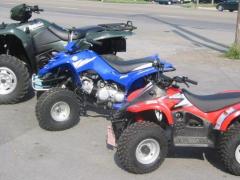
Multiple ATVs

(Photo Source: Pennsylvania State University. Agricultural Safety and Health)

The main differences between an ATV with a 2×4 drive train and an ATV with a 4×4 drive train are turning ability and driving ability on varying terrains. Different drive systems (limited slip differential, locking differential, and so on) result in different handling capabilities.

Attachments such as carrying racks and pulled equipment affect an ATV’s operation. Front and rear carrying racks are used to transport farm supplies such as small square bales or bagged feed. To avoid a rear overturn with your ATV, never carry more than one-third of the ATV’s weight on a rear carrying rack. Whenever possible, divide the load between a front and rear carrying rack.

When towing a load with an ATV, the load should never weigh more than the weight of the ATV plus the weight of the operator. You should hitch only to the manufacturer’s hitch point and follow all manufacturer’s recommendations for your ATV because some attachments may be too heavy for your ATV’s brakes. When you go down a slope with an attachment that is too heavy, the attachment can push your ATV, causing it to jackknife or resulting in an overturn.

General Safety Recommendations

  • Never carry a passenger. Extra riders can limit the operator’s ability to steer and control the vehicle and can interfere with the operator’s ability to shift his or her weight properly.

    • A passenger is allowable only if the ATV was designed for two people.
  • Do not allow children to ride with the operator during work tasks.
  • Check your riding area to make sure it is free from hazards such as rocks, stumps, branches, and fences.
  • Know and obey the laws in your area related to ATV operation.
  • Ask permission before riding on private property and be aware that some areas may require written permission.
  • Use lights, reflectors, and flags to increase the ATV’s visibility.
  • Do not show off, perform stunts, or speed.
  • ATV tires are not designed for road travel, so avoid public roads and paved surfaces, which can affect the handling and control of the ATV, posing a risk for overturn. 
  • Keep your feet on the footrests at all times.
  • Remember that certain ATV parts, such as the engine, exhaust pipe, and muffler, are hot and can cause burns.
  • Keep your hands and feet away from all moving parts on the ATV.
  • Maintain proper riding posture to operate the controls effectively.
  • Do not operate an ATV if you have drugs or alcohol in your bloodstream; your reaction time and judgment may be impaired.

See the video clip below from the ATV Safety Institute to learn about preparing for an ATV ride.


Use the following format to cite this article:


ATV Safety for Agricultural Producers. (2012) Farm and Ranch eXtension in Safety and Health (FReSH) Community of Practice. Retrieved from http://www.extension.org/pages/64338/atv-safety-for-agricultural-producers.


Sources

2014 annual report of ATV-related deaths and injuries. (2015) Consumer Product Safety Commission. Retrieved from https://www.cpsc.gov/s3fs-public/pdfs/2014atvannualreport.pdf.

Baker, D. (2000) All-terrain vehicles. University of Missouri Extension. Retrieved from http://extension.missouri.edu/publications/DisplayPub.aspx?P=G1936.

Murphy, D. and Harshman, W. (2005) The safe use of ATVs in agriculture. Pennsylvania State University College of Agricultural Sciences Cooperative Extension. Retrieved from https://extension.psu.edu/the-safe-use-of-atvs-in-agriculture.

Schwab, C., Miller, L., and Satre, S. (2008) ATV safety for farm work, recreation. Iowa State University Extension. Retrieved from https://store.extension.iastate.edu/ItemDetail.aspx?ProductID=5065.


Reviewed and Summarized by:
 Linda M. Fetzer, Pennsylvania State University – lmf8@psu.edu
Jimmy Maass, Virginia Farm Bureau (Has since retired)
Dennis J. Murphy, Pennsylvania State University (Has since retired)
Michael Pate, Pennsylvania State University – mlp79@psu.edu
Aaron M. Yoder, University of Nebraska Medical Center – aaron.yoder@unmc.edu