American Society of Safety Engineers

ASSE Logo

The American Society of Safety Engineers (ASSE) was formed in 1911 and is the world’s oldest professional safety society. The organization’s mission is to promote the expertise, leadership, and commitment of its members while providing members with professional development opportunities and advocacy and standards development. With over 30,000 worldwide members, the organization works to create safer work environments by sharing information and best practices to prevent workplace fatalities, injuries, and illnesses.

ASSE AgBranch Logo

The Food & Agribusiness Branch of the American Society of Safety Engineers (ASSE) provides an avenue for agricultural safety professionals to network and gain knowledge. Examples of the topics addressed by this branch include tractor safety, noise exposure, confined space entry, and so on. Once a person is a member of the Manufacturing Practice Specialty through ASSE, he or she can join the Food & Agribusiness Branch at no additional cost. Click here to visit ASSE website and learn more about the Food & Agribusiness Branch of the ASSE.


Reviewed and Summarized by:
Linda M. Fetzer, Pennsylvania State University – lmf8@psu.edu
Dennis J. Murphy, Pennsylvania State University – djm13@psu.edu
Mike Wolf, Agricultural Branch, ASSE – mwolf01@harris.com
Aaron Yoder, University of Nebraska Medical Center – aaron.yoder@unmc.edu


Canadian Agricultural Safety Association

CASA Logo

(Source: Canadian Agricultural Safety Association)

The Canadian Agricultural Safety Association (CASA) is a national nonprofit organization promoting farm safety in the agricultural sector. CASA’s vision is a country where no one is hurt farming, and CASA is working with partners in government and business and with farming organizations across the country to support initiatives that equip producers, their families, and their workers with the information and tools needed to make farms safe places to live, work, and play.

Click here to visit the CASA website and learn more about the following agricultural safety and health resources:

  • Safety Shop: A library of resources that includes articles, videos, presentations, and farm safety training kits
  • Canadian Injury Data: Studies that examine long-term trends in agricultural injuries in Canada
  • Farm Safety Grants: A listing of funding available for the development of tools and resources or training to help make communities safer (available to Canadian applicants only)

Canada FarmSafe Plan

Agriculture continues to rank as one of the most dangerous occupations. Farmers and ranchers may say that safety is important, but very few have gone through the process of developing a safety plan for their agricultural operations. The CASA has developed a program called Canada FarmSafe to help farmers manage safety and health activities on their operations. Click here to be directed to the FarmSafe page. From this page you can download the basic Canada FarmSafe Plan at no charge to help you start developing a safety plan. Canada FarmSafe provides instructions that will enable you to develop safety and health policies, identify and control hazards, communicate responsibilities, and review your plan.


Reviewed and Summarized by:
Glen G. Blahey, Canadian Agricultural Safety Association  GBlahey@casa-acsa.ca

Linda M. Fetzer, Pennsylvania State University – lmf8@psu.edu
Michelle French Lancaster, Canadian Agricultural Safety Association – mfrenchlancaster@casa.acsa.ca
Dennis J. Murphy, Pennsylvania State University – djm13@psu.edu
Aaron M. Yoder, University of Nebraska Medical Center – aaron.yoder@unmc.edu


Asthma and Agriculture


Use the following format to cite this article:

Asthma and agriculture. (2021). Agricultural Safety and Health eXtension Community of Practice. Retrieved from https://ag-safety.extension.org/asthma-and-agriculture/.

Asthma is characterized by airflow obstruction, bronchial hyper-responsiveness, and chronic inflammation of the airways. These responses cause wheezing, shortness of breath, coughing, and tightness in the chest.

Asthma Types

The two most common types of asthma are allergic and nonallergic. The type of asthma depends on the triggers and environments that cause symptoms.

Allergic or Atopic Asthma

Allergic asthma, also referred to as atopic asthma, is caused by exposure to allergens such as pollen, mold, pet dander, and so on. These allergy triggers—pollen, for example—may not be present at all times, so asthmatic symptoms vary depending on the season and the environment.

Allergic asthma activates the body’s immune system, which protects the body from harmful foreign substances and microbes. When the body comes into contact with a foreign substance, it releases antibodies to react with or destroy the substance. However, sometimes the antibody release involves the overproduction of an antibody called immunoglobulin E, causing a release of chemical mediators such as leukotriene, prostaglandin, and histamine, which can result in the contractions of airway muscles that characterize an asthma attack.

Nonallergic Asthma

Nonallergic asthma is triggered by nonallergenic substances such as wood smoke, grain dust, tobacco smoke, fresh paint, cleaners, perfumes, and so on. Symptoms are similar to those of allergic asthma. Repeated exposure to these nonallergenic substances causes the release of chemical mediators (described above) that can cause airway constriction.

Occupational Asthma

Occupational asthma, the type of asthma most commonly associated with agriculture, is typically caused by exposure to a substance in the workplace that enters the lungs and activates the immune defense mechanism. The management of occupational asthma symptoms is impacted by exposure to allergens. Agricultural workers on farms and at grain elevators and food processing plants are at an increased risk of occupational asthma.

Examples of Causes or Aggravators of Occupational Asthma

Agricultural producers are exposed to a wide variety of allergens than can cause asthma or aggravate existing asthma. Additional risk factors for the development of asthma include genetics, gender, allergies, and environmental factors (such as tobacco smoke, mold, and so on).

Some of the triggering agents associated with asthma in agriculture include the following:

  • Grain dust: Grain dust is commonly found in barns, flour mills, and grain-storage facilities. Asthma resulting from grain dust occurs when a person is sensitized to the grain dust or a dust component.
  • Bacteria and fungi: Airborne bacteria and fungi (mushroom spores, mold, and so on) residing in agricultural structures can get into the lungs of an agricultural producer. Some of the cellular components of these bacterial and fungal microorganisms can cause an immune response that can result in an asthma attack.
  • Insects: Mites can be found in most homes and agricultural settings. These extremely small insects feed off organic material and may trigger asthma attacks for some people. Storage mites can be found in storage areas of organic products; dust mites are located wherever there is dust; and red spider mites are located in certain greenhouse crops. Cockroaches and their droppings can also trigger asthma attacks in some people, so it is necessary to clean areas attractive to cockroaches at least every two to three days.
  • Pesticides: Some of the pesticides used to get rid of pests have been associated with agricultural asthma.
  • Animal products: Potential allergens from animals include substances that contain proteins, such as dander, saliva, urine, and feces. The breakdown of urea and ammonium excretions can cause a release of ammonia in the environment that can be a respiratory irritant. Feathers and wool can also trigger asthmatic reactions.
  • Pollen
  • Tobacco leaves
  • Chemicals: Chemical irritants include polyvinyl chloride vapor and amprolium hydrochloride.
  • Wood smoke: Burning wood releases a mixture of harmful gases that can cause asthma attacks.

Other Types of Asthma

Other types of asthma include the following:

  • Viral-induced asthma: Viral respiratory infections, such as the common cold, can trigger an asthma attack.
  • Nocturnal asthma: Nocturnal asthma refers to asthma that worsens during the night—typically between two and four o’clock in the morning—either due to sinus infection or from the presence of an allergen such as dust mites or pet dander. Often gastrointestinal reflux (heartburn) is worse at night and may trigger an attack.
  • Reactive Airways Dysfunction Syndrome (RADS): RADS occurs after exposure to high concentrations of airborne irritants, such as chlorine. Asthmatic symptoms develop within 24 hours and may continue for several months or longer. Symptoms may recur with further exposure to high concentrations of the irritant.

Exercise and air temperature (especially cold air) can also trigger a person’s allergic or nonallergic asthma.

Reducing Your Risk of an Asthma Attack

Anyone with symptoms of asthma should have a primary medical care provider. Those with persistent symptoms may need to use a daily controller medicine, usually one that is inhaled, to reduce the chance of a flare-up. In addition, people with asthma should also always have a rescue inhaler available for acute symptoms.

The following actions can reduce allergens on your farm or ranch and limit your exposure to allergens:

  • Store grain at recommended moisture-content levels to reduce mold growth.
  • Properly ventilate animal-housing areas to reduce the accumulation of ammonia and other gases.
  • Frequently remove animal waste to reduce the buildup of ammonia and decrease your exposure to urine and fecal allergens.
  • Identify dust hazards at your farm or ranch and reduce exposure by cleaning these areas. Limit your time in dusty areas.
  • When cleaning a barn or stable, wet down areas to avoid dust from becoming airborne.
  • If you are a farm manager, provide appropriate personal protective equipment (PPE) for your employees.
  • Wash your work clothes in hot water at least once per week.
  • To protect against dust, bacteria, fungi, insects, and animal products when cleaning, spraying, harvesting, handling grain, or working in an animal-confinement building, wear an N-95 or N-100 disposable particulate respirator that is properly fitted and approved by the National Institute of Occupational Safety and Health (NIOSH).
Double Strap Respirator

(Particulate Respirator. Source: Pennsylvania State University. Agricultural Safety and Health)

Resources

  • For more information about respiratory illnesses associated with agriculture, click here to link to the article “Respiratory Illnesses Associated with Agriculture.”
  • For more information about the hazards of grain dust, click here to link to the article “Grain Dust Explosions.”
  • For more information about PPE and respiratory protection, click here to link to the article “Respiratory Protection on the Farm and Ranch.”

Use the following format to cite this article:

Asthma and agriculture. (2021). Ag Safety Safety and Health eXtension Community of Practice. Retrieved from http://www.extension.org/pages/66326/asthma-and-agriculture.

Sources

Asthma. (2018) Candian Centre for Occupational Health and Safety. Retrieved from https://www.ccohs.ca/oshanswers/diseases/asthma.html.

Asthma. (2019). Centers for Disease Control and Prevention. Retrieved from http://www.cdc.gov/asthma/faqs.htm.

Schenker, M.B. (2005) Farming and asthma. Occupational and Environmental Medicine. Retrieved from http://oem.bmj.com/content/62/4/211.1.full.

Reviewed and Summarized by:
Linda M. Fetzer, Pennsylvania State University – lmf8@psu.edu
Tom Irons, MD, East Carolina University  ironst@ecu.edu
David Lipton, North Carolina Department of Health and Human Services  david.lipton@dhhs.nc.gov
Rick Langley, North Carolina Department of Health and Human Services  rick.langley@dhhs.nc.gov
Dennis J. Murphy, Pennsylvania State University (Has since retired)
Aaron M. Yoder, University of Nebraska Medical Center – aaron.yoder@unmc.edu
Article updated 1/26/21

Rollover Protective Structures


Use the following format to cite this article:

Rollover protective structures. (2013). Farm and Ranch eXtension in Safety and Health (FReSH) Community of Practice. Retrieved from http://www.extension.org/pages/66325/rollover-protective-structures.


Tractor rollover incidents account for approximately half of all tractor-related fatalities across the country. A rollover protective structure (ROPS) fits on an agricultural tractor and protects the operator in the event of a rollover.

A tractor’s ROPS and seat belt work in conjunction to secure the operator in a protective zone, reducing the operator’s risk of being crushed under the tractor should it overturn. In most situations, the ROPS limits the overturn to little more than 90 degrees.

Although tractors built after 1985 are equipped with ROPSs and seat belts, many farmers and ranchers use older tractors that are not equipped with these safety devices. According to Occupational Safety and Health Administration (OSHA) guidelines, farm and ranch owners are required to have a ROPS and seat belt installed on all tractors operated by employees.

ROPS: Type and Structure

There are three types of ROPS, all of which protect the operator in the event of a rollover:

  • two-post ROPS
  • four-post ROPS
  • ROPS with enclosed cabs

Two-Post ROPS

Tractor with ROPS

(Two-post ROPS. Source: Pennsylvania State University. Agricultural Safety and Health)

The two-post ROPS (pictured above) is the most common type of ROPS. The upright posts are typically vertical or slightly tilted and are mounted to the rear axle. Two-post ROPSs are either rigid or foldable.

  • A foldable ROPS has a specially designed hinge that allows the ROPS to fold to fit in low-clearance areas.
  • You must raise and lock the foldable ROPS after completing activities in low-clearance areas.
    • A foldable ROPS that is not in its upright position will not provide protection during a rollover.

Four-Post ROPS

A four-post ROPS is mounted on both axles and on the frame in front of the operator. Occasionally, a four-post ROPS is mounted to the tops of specially reinforced flattop rear fenders.

ROPS with an Enclosed Cab
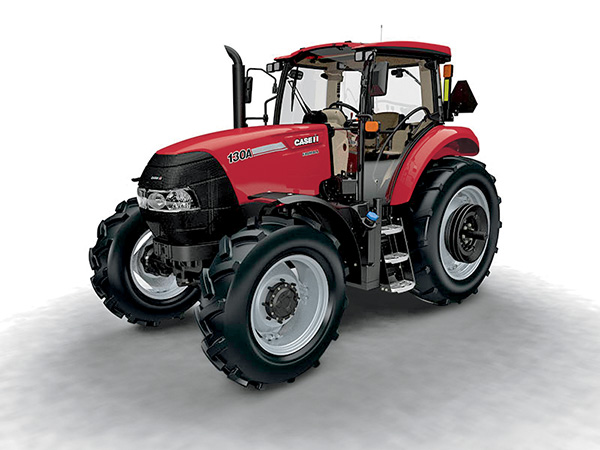
Farmall 130A Tractor

Farmall 130A Tractor. Photo Source: Case IH Media Library

Typically, a tractor is outfitted with a ROPS with an enclosed cab by the manufacturer—the tractor’s cab structure is designed to act as a ROPS. As sales of tractors with cabs have increased, ROPSs with enclosed cabs have become more common.

Falling Object Protective Structures

A falling object protective structure (FOPS) is a canopy specially designed to protect the operator from falling objects. FOPSs are especially recommended for use on front-end loaders and when working in wooded areas or other situations that may involve falling objects.

Most FOPS are used on tractors with four-post ROPS or ROPS with enclosed cabs. 

Retrofitting Older Tractors

Most tractors built before 1985 can and should be retrofitted with ROPS and seat belts. Check with your local dealership or manufacturer to determine the availability of ROPS retrofit kits. You may also click here to access the University of Kentucky ROPS Guide to determine whether a ROPS is available for your tractor. You should have technicians at a dealership install any aftermarket ROPS.

ROPS Safety Standards

Do not use a homemade ROPS on your agricultural tractor; it will not provide you with the necessary protection in the event of a rollover and may pose liability issues.

Manufacturers have designed and tested ROPS to meet specific standards developed by the Society of Automotive Engineers (SAE), the American Society of Agricultural Engineers (ASAE)—now called the American Society of Agricultural and Biological Engineers (ASABE)—and other organizations. These standards indicate that a ROPS has passed specially designed crush, static, and dynamic tests that confirm its effectiveness.

ROPS must meet the following standards:

  • SAE J2194
  • OSHA 1928.51

In Canada, ROPS must meet the following standards:

  • Canadian Standards Association (CSA) B352.0
  • Canadian Standards Association (CSA) SA 352.1 
Certification labels identify structures that meet the safety standards required of a ROPS. Some cab structures and bars may look like ROPS, but only ROPS have certification labels.
  • Two- and four-post ROPS should have labels applied directly to the posts.
  • The label on a ROPS with enclosed cab should be located on the edge of the cab door.
Like ROPS, FOPS must meet SAE and ASAE standards. If you are uncertain whether your canopy is a certified FOPS, check with the ROPS supplier or equipment dealer.

ROPS Maintenance

A factory-installed ROPS should never be structurally modified (that is, cut, welded, and so on). Such modifications can impact the integrity of the ROPS and impair its effectiveness in a rollover.

Periodically check the ROPS and seat belt on each tractor for signs of wear such as rust and cracks. Contact the dealership regarding the best way to properly correct any issues.

Resources

Click here to learn about aftermarket ROPS rebate programs available in certain areas of the United States.


Use the following format to cite this article:

Rollover protective structures. (2013). Farm and Ranch eXtension in Safety and Health (FReSH) Community of Practice. Retrieved from http://www.extension.org/pages/66325/rollover-protective-structures.

Sources


American Society of Agricultural and Biological Engineers (ASABE), 2012. ANSI/ASAE S478.1. Roll-Over Protective Structures (ROPS) for Compact Utility Tractors. St. Joseph, MI. Retrieved from http://www.elibrary.asabe.org.


Murphy, D. and Buckmaster, D. (2003) Rollover protection for farm tractor operators. Penn State College of Agricultural Sciences, Agricultural and Biological Engineering. Retrieved from https://extension.psu.edu/rollover-protection-for-farm-tractor-operators.

The Kentucky ROPS Guide. (2010) Southeast Center for Agricultural Health and Injury Prevention, University of Kentucky. Retrieved from http://rops.ca.uky.edu/?utm_medium=301&utm_source=warehouse-page.

 
Reviewed and Summarized by:
Linda M. Fetzer, Pennsylvania State University – lmf8@psu.edu
Jimmy Maass, Virginia Farm Bureau Insurance (Has since retired)
Dennis J. Murphy, Pennsylvania State University – djm13@psu.edu
Charles V. Schwab, Iowa State University  cvschwab@iastate.edu
Aaron M. Yoder, University of Nebraska Medical Center – aaron.yoder@unmc.edu
 

International Society for Agricultural Safety and Health (ISASH)


ISASH Logo

(ISASH Logo. Source: International Society for Agricultural Safety and Health)

The National Institute for Farm Safety (NIFS) recently approved a name change to become the International Society for Agricultural Safety and Health (ISASH). This organization began in the 1940s with a meeting of three farm safety specialists and has grown into the ISASH, with members from across the globe. Over the years, ISASH and its predecessors have been instrumental in the development and implementation of the slow-moving vehicle (SMV) emblem, the development of agricultural hand signals, the promotion of rollover protective structures (ROPSs) for tractors, and positive changes in safe machinery design.

ISASH’s Mission Statement

ISASH (formerly NIFS) is a nonprofit organization dedicated to the professional development of agricultural safety and health professionals. ISASH leads the national and international agricultural community in the prevention of agricultural injury and illness. ISASH provides opportunities for sharing information about research and intervention programs, improving professional skills and knowledge, networking, and other supportive activities.

Click here to be directed to the ISASH home page. From the home page, you can learn more about the organization’s history, join as a member, locate agricultural safety and health professional education events, and explore links to other safety organizations.

Reviewed and Summarized by:
Linda M. Fetzer, Pennsylvania State University – lmf8@psu.edu
Dennis J. Murphy, Pennsylvania State University (has since retired) –  djm13@psu.edu
Robert E. Petrea, University of Illinois (has since retired)
Aaron M. Yoder, University of Nebraska Medical Center – aaron.yoder@unmc.edu

Childhood Agricultural Injury Survey

Children and youth are active on many family-operated farms and ranches across the country. Agriculture continues to rank as one of the most dangerous occupations, and children and youth on a farm or ranch are as susceptible to the occupation’s dangers as adults. Injuries can occur when children and youth lack supervision, perform dangerous jobs, lack proper training, or do jobs that are not age-appropriate.

The National Institute for Occupational Safety and Health (NIOSH) completed the Childhood Agricultural Injury Survey (CAIS) to develop national injury data covering youth under 20 years old who work on farms in the United States. NIOSH provides the data in accessible electronic tables (e-tables) via the Internet. Click here to be directed to the NIOSH website for complete access to this valuable information.  

The NIOSH site provides access to e-tables representing CAIS data for the years 2001, 2004, 2006, and 2009, and Minority Farm Operator Childhood Agricultural Injury Survey (M-CAIS) data for the years 2000, 2003, and 2008. Data for additional years will be added when the information becomes available.  

Additional information located on NIOSH’s CAIS website includes links to NIOSH publications relating to children and agriculture, reports of investigations of agricultural fatalities involving children, extramural funding and research opportunities, and other resources addressing the prevention of childhood agricultural injury.

Click here for information about the occupational injury surveillance of production agricultural survey data from 2001, 2004, and 2009.


Reviewed and Summarized by:
Linda M. Fetzer, Pennsylvania State University – lmf8@psu.edu   
Kitty Hendricks, National Institute for Occupational Safety and Health – kjt1@cdc.gov
Dennis J. Murphy, Pennsylvania State University – djm13@psu.edu
Aaron Yoder, University of Nebraska Medical Center – aaron.yoder@unmc.edu


Ag Safety and Health Resource Topics

SAY Project and National Clearinghouse

Women in Agriculture

Mobile Apps

Recursos en Español sobre Seguridad y Salud Agrícola

Resources Available

Education and Outreach

Self-Paced Learning

Instructor Led Learning

Training and Resources for Instructors

Webinars

Upcoming Events

Video Resources

Articles (by Topic Area)

Why do combines catch fire?

Combines typically catch fire for two reasons, both of which are preventable:

  • Fires can be caused by the ignition of trash and debris (leaves, chaff, stalks, and other organic material) that build up around the engine, exhaust, or other machine parts that get hot during normal operations.
  • Fires can be caused by a leak in a combine’s fuel or hydraulic system. Fuel or hydraulic fluid can ignite when it comes in contact with something hot, such as an engine’s muffler and exhaust system. 

Farm insurers consider combine fires one of the most common and expensive types of fire incidents in production agriculture. Many combine fires are extremely dangerous because they occur in the mechanisms behind the operator’s station. When such fires start, they are difficult to see, and by the time they are visible, they are intense and difficult to extinguish. Combines should be equipped with at least two readily accessible ABC fire extinguishers that an operator can reach and use before a fire becomes uncontrollable.

What is anhydrous ammonia and is it dangerous?

Anhydrous ammonia (NH3) is an effective nitrogen fertilizer used extensively on field-corn acreage in the Midwest.

Exposure to anhydrous ammonia is very dangerous because the gas is a hygroscopic compound that seeks moisture from the nearest source, which can be the moisture-laden tissue of the human body. Exposure of high-moisture-content areas of the body—including eyes, lungs, and mucous membranes—is especially dangerous. After exposure to anhydrous ammonia, it is extremely important to flush these areas immediately with potable water for at least 15 minutes. Inhalation of anhydrous ammonia gas can cause a person’s throat to swell shut, leading to suffocation. Victims of anhydrous ammonia exposure should seek medical attention immediately.

For more information, click here to link to the article “Anhydrous Ammonia Safety.”

How should I check for leaks in hydraulic hoses?

When pinhole leaks develop in hydraulic lines, take the following steps to identify the locations of leaks and avoid injury: 

  • Before looking for the leak, shut off the power source to the hydraulic pump, and lower the implement to the ground.
  • Relieve the pressure of the hydraulic system by moving the hydraulic control lever back and forth.
  • To locate the leak, pass a piece of cardboard or mirror over the area where you suspect the leak.
  • Fix the leak immediately.

Never use your hand to check for a hydraulic leak. Hydraulic fluid can be under pressures of between 1,000 and 3,000 pounds per square inch (psi). Fluid under this pressure can penetrate the skin, necessitating immediate medical attention.

For more information about hydraulic safety, click on the article title below:

Hydraulic Safety